
General
Beyond the Green Screen: Crafting Cinematic Experiences with Human-AI Synergy
The future of filmmaking is here, blending human ingenuity with artificial intelligence to unlock unprecedented creative possibilities and efficiencies. Discover how professional crews are integrating AI seamlessly into their cinematic workflows.
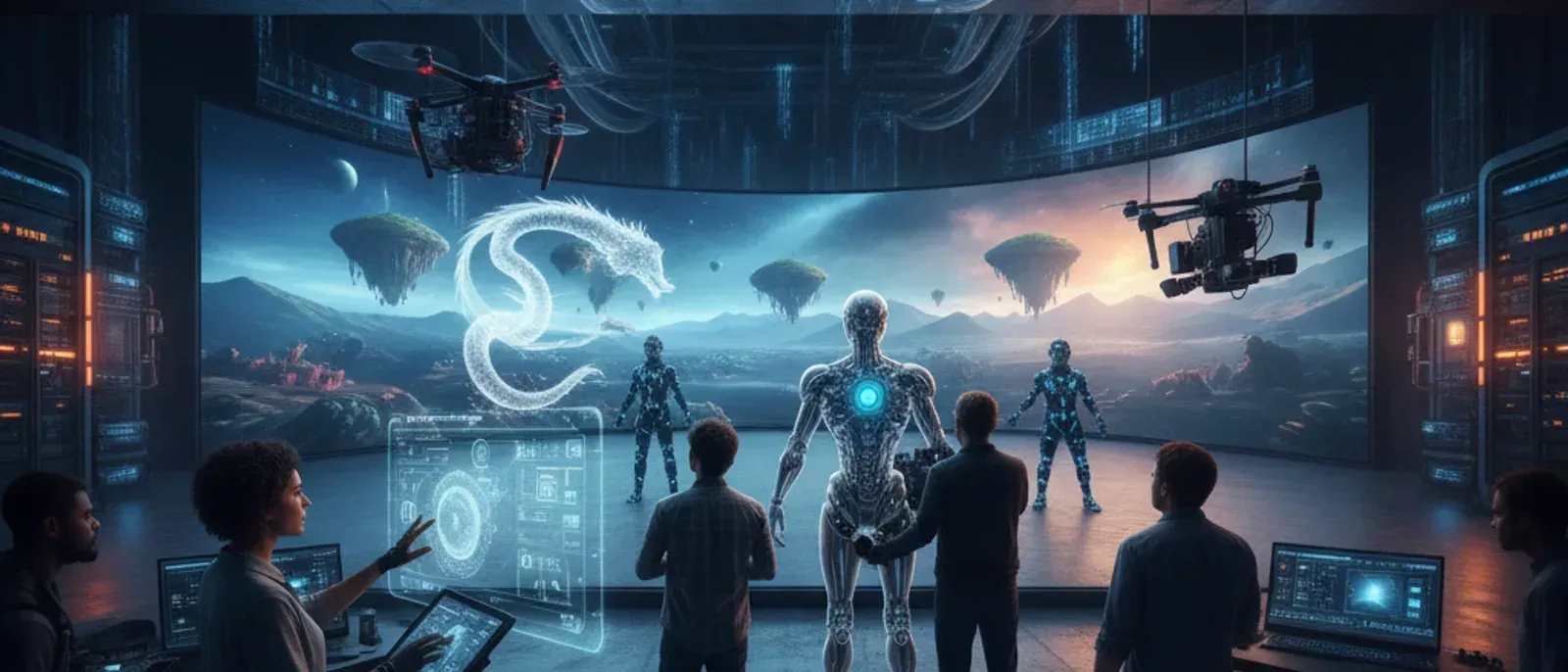
The air on set was thick with a mix of anticipation and anxiety. Director Anya Sharma paced, reviewing storyboards for a pivotal scene in their new brand film. The sequence involved a complex, futuristic city skyline, a chase, and a deeply emotional moment, all to be shot on a modest budget. Traditional methods would require extensive CGI, countless hours, and likely, a budget overrun. Anya knew there had to be a smarter way. This challenge, common in modern production, highlights a growing need for innovative solutions. It paves the way for a more streamlined and creative approach: Hybrid Human-AI Production.
At Kraavon, we partner with product teams to build premium digital products. We understand the power of seamless integration. We see the same potential for transformation in cinematic workflows. Integrating AI is not about replacing human talent. It is about amplifying it. AI acts as a powerful co-pilot, enhancing efficiency and unlocking new creative avenues. This approach helps teams move faster. It also lets them achieve more compelling results.
Pre-Production: Laying the Foundation with AI Intelligence
Pre-production sets the stage for any film. It is where ideas take shape and plans are solidified. This phase traditionally involves intensive manual effort. Script breakdowns, concept art, storyboarding, and location scouting consume significant time and resources. AI tools are now transforming these foundational steps. They allow creative teams to iterate faster and visualize concepts more effectively. This shift enables directors like Anya to explore more options. It helps them make informed decisions earlier in the process.
Consider script analysis. AI can parse a screenplay in minutes. It identifies key themes, character arcs, and potential plot holes. It can even flag dialogue inconsistencies. This helps writers refine their scripts. It also gives directors a deeper understanding of the material. For Anya's futuristic city, an AI tool could analyze the script. It would suggest visual motifs consistent with the narrative tone. This feedback loop is invaluable for early-stage development.
Concept art generation is another prime example. Artists can input textual descriptions or rough sketches. AI systems then generate a multitude of visual styles. They create diverse interpretations of a scene or character. This speeds up the creative exploration phase dramatically. Instead of days, concept variations can be produced in hours. This means more options for the director to review. It ensures the final aesthetic aligns perfectly with the vision.
Virtual location scouting also benefits from AI. Imagine exploring hundreds of potential shooting locations remotely. AI can analyze satellite imagery and 3D scans. It identifies places matching specific criteria. It considers lighting conditions, accessibility, and potential permits. This saves travel time and expense. It also opens up possibilities that might otherwise be overlooked. For Anya's chase scene, AI could suggest urban environments. It could find unique angles for dramatic effect.
- AI-powered script analysis for deeper narrative insights.
- Rapid concept art generation for visual exploration.
- Virtual location scouting and environment mapping.
- Automated scheduling and resource allocation for efficiency.
- Character design and wardrobe iteration with AI assistance.
These tools do not replace the artist's eye or the director's vision. Instead, they provide a powerful assist. They handle the repetitive, time-consuming tasks. This frees human creatives to focus on refinement and innovation. The Hybrid Human-AI Production model truly shines here. It allows for unprecedented speed and creative breadth in pre-production. It helps teams lay a stronger foundation. This leads to a more robust and efficient entire project lifecycle.
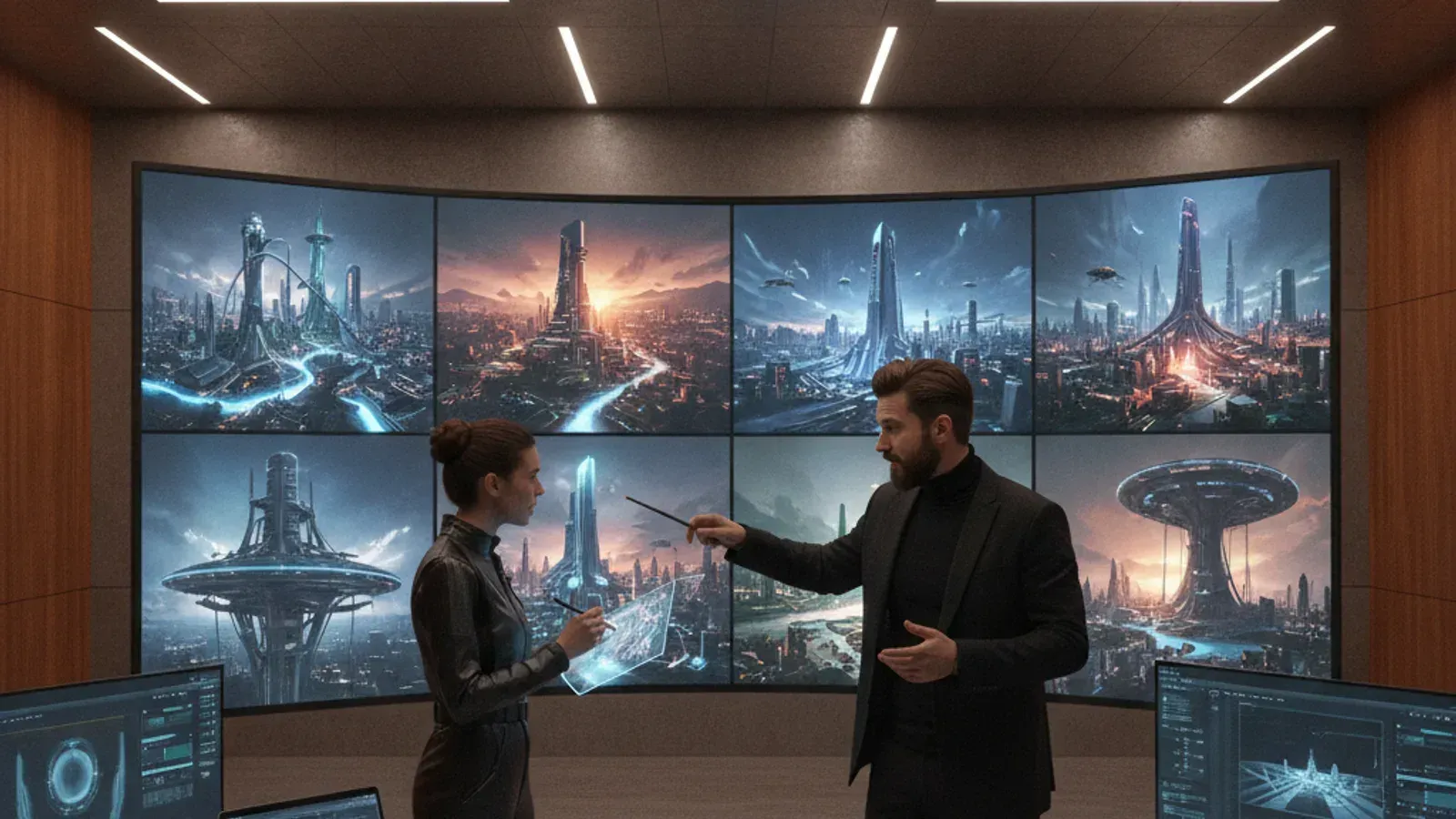
AI tools can rapidly generate concept art, allowing creative teams to visualize and iterate on ideas much faster.
On Set: AI as an Extra Pair of Hands and Eyes
The production phase, the actual filming, is often the most dynamic and unpredictable. Time is money on set. Every minute counts. AI is stepping in to assist crews in real-time. It helps them capture the best footage efficiently. This integration is subtle but impactful. It ensures the creative vision is executed with precision. It also minimizes costly reshoots and delays.
Virtual production stages are a prime example. These stages use massive LED screens. They display AI-generated or pre-rendered environments. Actors perform within these digital worlds. The camera captures both the actor and the virtual backdrop in real-time. This eliminates the need for extensive green screen work. It also provides immediate visual feedback. Anya could have her actors perform the chase scene directly within the futuristic city. This allows for more immersive performances.
AI can also assist with camera operation. Smart camera systems can track subjects automatically. They can maintain perfect focus and framing. This is especially useful for fast-paced action sequences or complex choreography. Imagine an AI-guided drone capturing dynamic aerial shots. It would execute precise movements that would be challenging for a human operator. This allows cinematographers to focus on the artistic composition. The AI handles the technical execution.
Furthermore, AI can provide real-time quality control. It can analyze footage as it is being shot. It detects issues like focus problems, unwanted shadows, or continuity errors. This immediate feedback allows the crew to make adjustments on the spot. It prevents issues from snowballing into larger problems in post-production. For Anya's emotional moment, AI could ensure consistent lighting. It would also check the actor's eye-line, maintaining narrative integrity.
AI tools are not just for special effects. They are becoming integral to practical filmmaking. From intelligent camera rigs to real-time scene analysis, AI enhances the on-set experience. It empowers crews to achieve more with less friction. This direct assistance ensures a smoother shooting process. It supports the entire creative team.
Even scheduling and crew management can benefit. AI systems can dynamically adjust call times. They respond to unforeseen delays or changes in the shot list. This optimizes resource allocation. It keeps the production running smoothly. This level of on-set efficiency is a game-changer. It ensures valuable production time is spent effectively. It helps the director maintain their creative flow. The synergy of human expertise and AI tools defines modern Hybrid Human-AI Production.
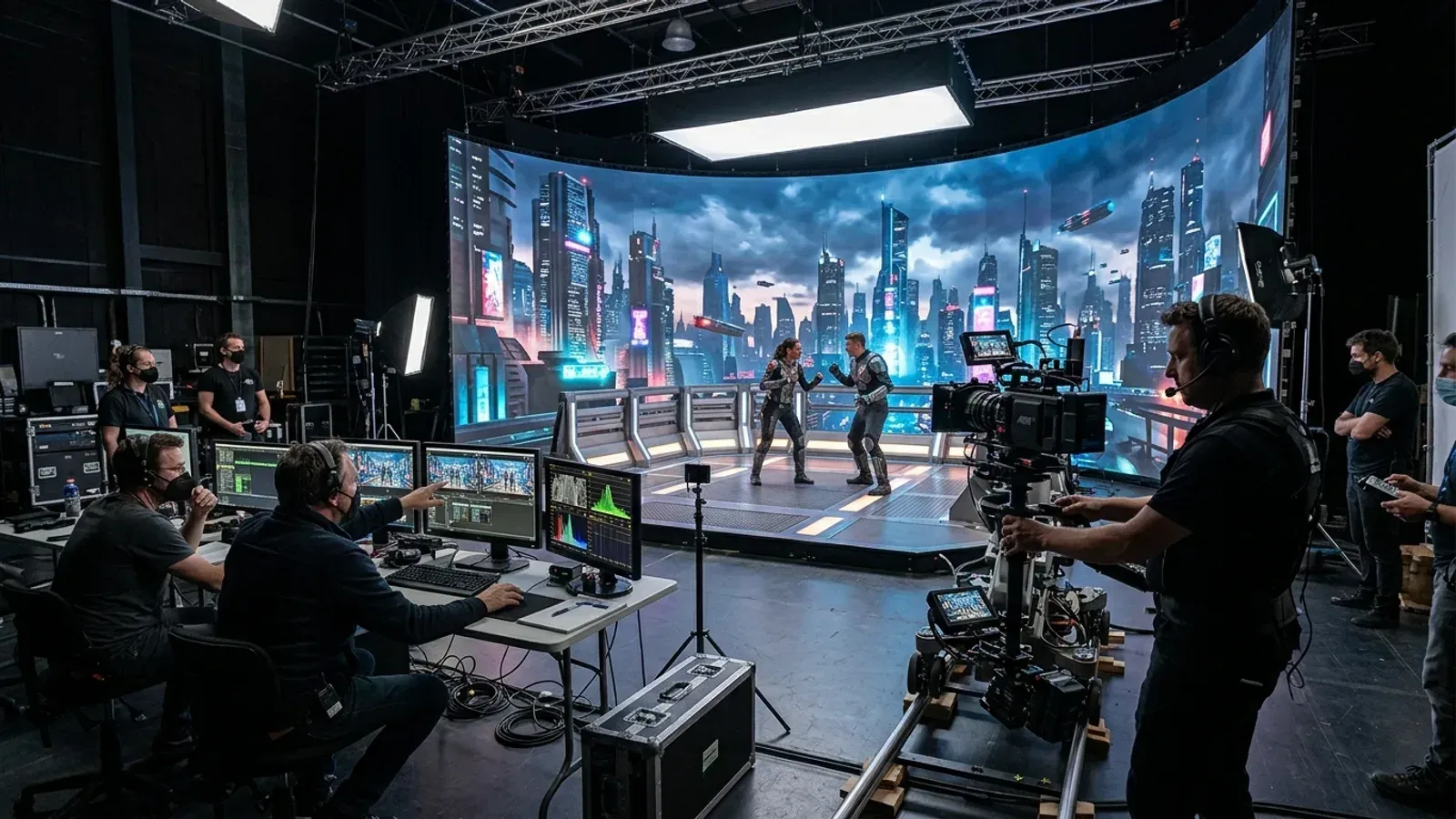
Virtual production and AI-assisted cameras allow for real-time environment integration and precise shot execution on set.
Post-Production: Amplifying the Craft with AI Tools
Post-production is where the raw footage transforms into a polished film. This phase involves editing, visual effects, sound design, color grading, and more. It is often the most time-consuming part of the process. AI is dramatically accelerating and enhancing these complex tasks. It allows editors and artists to achieve results that were once impossible or prohibitively expensive. This shift redefines what's achievable in the editing suite.
Automated editing is a fascinating development. AI can analyze footage, identify key moments, and even suggest initial cuts. It can assemble a rough edit based on script cues and emotional beats. This provides editors with a strong starting point. They can then refine and inject their unique artistic vision. It saves countless hours of sifting through raw footage. For Anya's film, AI could quickly assemble the chase sequence. It would stitch together the most impactful shots. This gives her editor more time for creative fine-tuning.
Visual effects (VFX) are another area where AI excels. Tasks like rotoscoping (isolating subjects from backgrounds) are incredibly labor-intensive. AI can automate much of this process. It performs complex masking with remarkable accuracy. This frees VFX artists to focus on creative elements. They can build more intricate digital environments. They can also craft stunning special effects. AI-powered tools also assist with de-aging, object removal, and even generating realistic digital doubles. This technology expands the possibilities of storytelling.
Sound design also benefits greatly. AI can clean up audio tracks. It removes background noise, echoes, and unwanted artifacts. It can also generate ambient soundscapes. It creates specific sound effects based on text prompts. This dramatically improves audio quality. It also enriches the auditory experience of the film. For the futuristic city, AI could generate subtle hums and distant traffic sounds. This would make the environment feel more alive.
Color grading is crucial for setting a film's mood. AI can analyze existing footage. It then suggests color palettes consistent with the desired tone. It can also ensure color consistency across different shots. This provides a solid base for human colorists to work from. They can then add their artistic flair. This streamlines a visually critical process.
- Automated rough cuts and scene assembly, providing a strong starting point for editors.
- Accelerated visual effects tasks like rotoscoping, de-aging, and object removal.
- AI-powered audio clean-up, noise reduction, and soundscape generation.
- Intelligent color grading suggestions and consistency checks.
- Efficient localization and dubbing with AI-driven voice synthesis and lip-syncing.
Finally, localization is made simpler with AI. AI-driven voice synthesis can generate natural-sounding dialogue in multiple languages. It can even match lip movements to the translated audio. This opens up global distribution channels more easily. It reduces the cost and complexity of reaching international audiences. The seamless integration of these tools defines effective Hybrid Human-AI Production. It empowers creatives to deliver high-quality content faster. This extends its reach further than ever before. To learn more about how we approach strategic partnerships, visit [Kraavon](/contact).
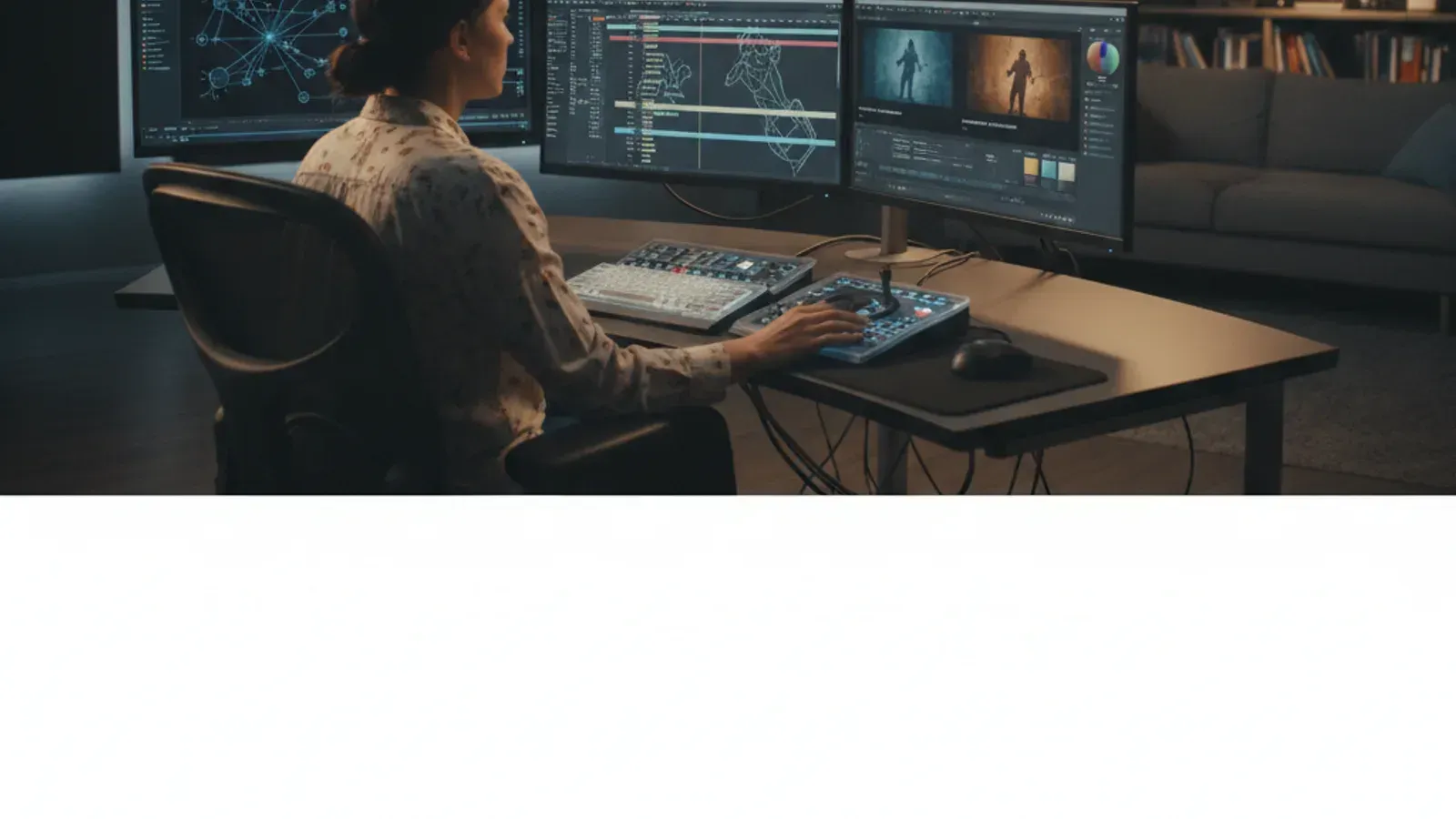
AI significantly streamlines complex post-production tasks, allowing editors to focus on creative storytelling and refinement.
The Art of Collaboration: Humans Still at the Helm
It is crucial to remember that AI in filmmaking is a tool. It is not a replacement for human creativity. The true power of Hybrid Human-AI Production lies in the collaboration. It combines the computational strength of AI with the irreplaceable ingenuity of the human mind. Directors, cinematographers, editors, and sound designers still drive the artistic vision. AI serves to execute, to assist, and to expand their capabilities. It handles the heavy lifting, allowing humans to soar creatively.
Anya, for instance, used AI to generate dozens of futuristic cityscape concepts. Yet, it was her discerning eye that selected the perfect one. It was her artistic direction that guided the AI's output. The AI-assisted camera systems might have captured perfect shots. But it was her vision that determined what to shoot and why. The automated initial edits provided a foundation. However, her editor's nuanced understanding of pacing and emotion crafted the final, impactful narrative. The human element injects soul. It provides the unique perspective that resonates with audiences.
Ethical considerations also remain firmly in human hands. Decisions about AI-generated content, deepfakes, and data privacy require human oversight. The responsibility for the message and its impact rests with the human creators. AI is a powerful engine. But humans provide the steering wheel and the map. They ensure the journey is meaningful and responsible. This partnership elevates both the efficiency and the artistry of filmmaking. It allows for more daring and ambitious projects.
AI offers a remarkable lever for creativity, but the 'why' behind every choice, the emotional resonance, and the ultimate vision, those remain uniquely human. Our job is to wield this new power wisely, to tell stories that truly move people.
The seamless integration of AI into cinematic workflows frees creative teams. It allows them to experiment more. It lets them take calculated risks. It also enables them to focus on the subtleties of storytelling. This new era of filmmaking is not about machines taking over. It is about humans, empowered by intelligent tools, pushing the boundaries of what is possible. It is about crafting more compelling, more immersive, and more impactful cinematic experiences. The blend of human intuition and AI efficiency creates a powerful combination. It truly redefines the craft.
Back on Anya’s set, the final cut of the brand film played. The futuristic city shimmered with life, the chase scene pulsed with energy, and the emotional moment landed perfectly. The team had delivered a film that exceeded expectations, under budget and ahead of schedule. They achieved this not by replacing their talent, but by augmenting it. They embraced Hybrid Human-AI Production as their strategic partner. This allowed them to unlock new levels of creativity and efficiency. The film was a testament to the power of human-AI synergy. It proved that the best stories are told when brilliant minds meet cutting-edge tools.
At Kraavon, we partner with founders and product teams to turn innovative ideas into premium digital products. Whether it is strategic design, engineering, or integrating advanced technologies like AI, we are here to help you build something remarkable.