
Development
Website Development Cost in India: Why Quotes Differ So Much
Ever wondered why website development cost in India can swing from ₹40,000 to over ₹4,00,000 for what seems like the same project? This guide explains the real factors behind these wildly different quotes.

The phone rings, and it is a familiar story. A business owner, let us call her Priya, runs a successful chain of boutique cafes. She knows she needs a new website, one that truly reflects her brand and helps her customers find her easily. She asks three agencies for quotes. The first one comes back at ₹70,000. The second, ₹2,80,000. The third, a staggering ₹7,50,000. Priya stares at the numbers, utterly bewildered. All three promised a modern, responsive website. All three seemed to understand her business. So, why the enormous difference in website development cost in India?
This scenario is incredibly common. You might have experienced it yourself. The truth is, you are not comparing apples to apples, even if the agencies use similar-sounding terms. The price gap is real and, in most cases, entirely defensible. It comes down to what is actually being priced, and what that money genuinely buys you at each level.
What Really Drives Website Development Cost in India?
When you ask for a website, you are not just buying a collection of pages. You are investing in a solution to a business problem. The true website development cost in India is driven by several critical factors that often go unmentioned in initial quotes.
Think of it like building a house. You can get a basic dwelling, or a custom-designed home with bespoke features. Both are houses, but the underlying work, materials, and expertise differ significantly. For websites, these differences manifest in areas like strategic thinking, design approach, technical complexity, and post-launch support.
- How much thinking happens before design starts? Does the agency simply take your brief at face value, or do they conduct research, analyse your business goals, and map out a user journey? Strategic discovery work ensures the website solves the right problems.
- Is the design bespoke or adapted from a system? A completely custom user interface and user experience (UI/UX) is time-intensive. Adapting a pre-existing template or design system is faster, but offers less unique differentiation.
- Can you edit your own content? A static website requires developers to make every change. A content management system (CMS) like WordPress or a headless CMS allows your team to update text, images, and even add new pages independently. This flexibility comes with an upfront cost.
- How much testing is done? Basic testing checks if buttons work. Rigorous testing involves cross-browser compatibility, performance optimisation, security audits, and user acceptance testing. This ensures reliability and a smooth experience for everyone.
- What happens after launch? Is it a 'hand-off and forget' model, or does it include post-launch support, performance monitoring, and options for future enhancements? A website is a living product that needs care.
These are the true differentiators. They explain why two quotes for a '5-page website' can look so wildly different. Let us break down what each price tier typically offers.
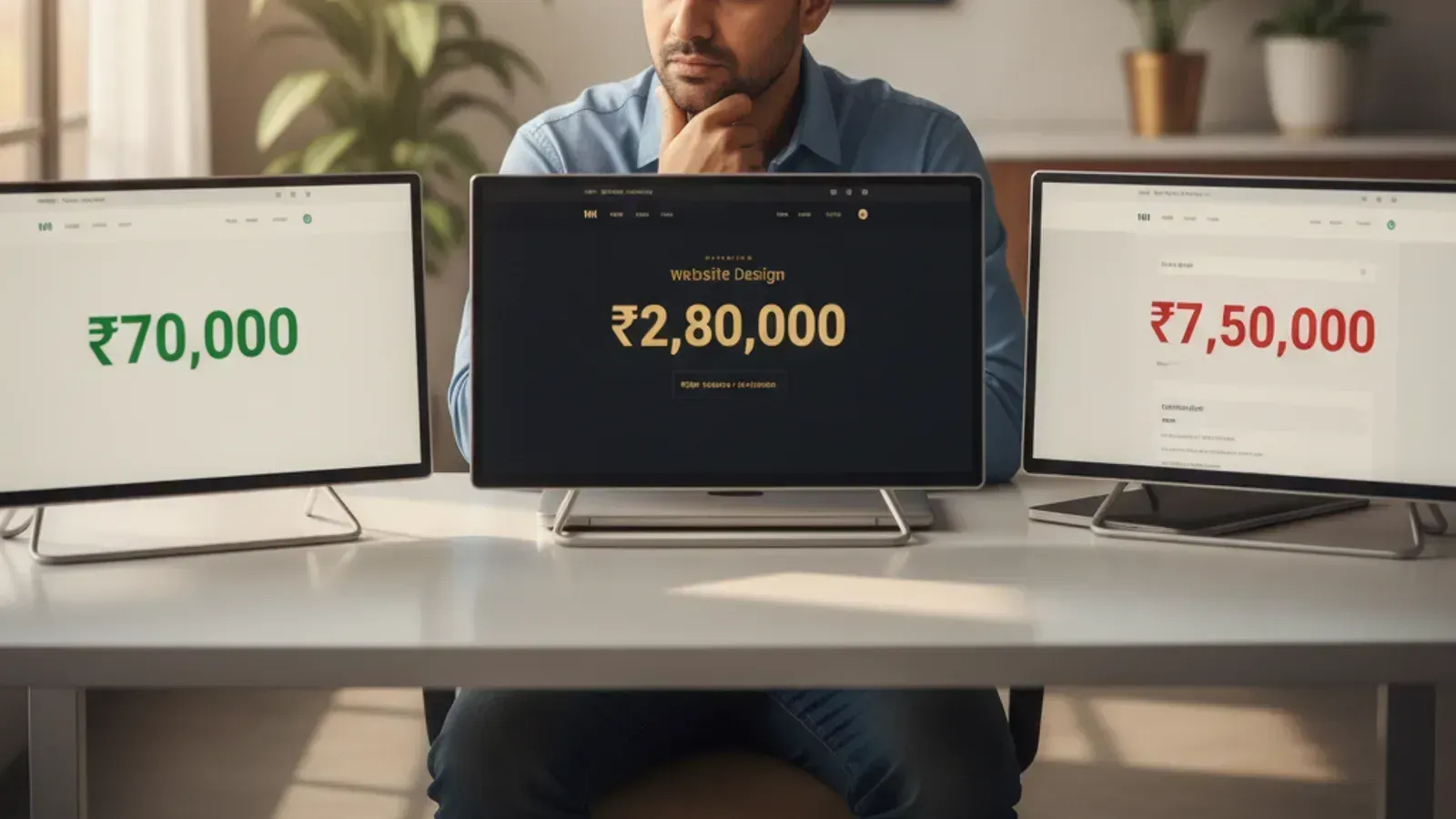
Navigating wildly different website quotes can be a bewildering experience.
Understanding Website Pricing: The Three Levels of Investment
To truly understand how much does a website cost, it helps to categorise projects into three common levels of investment. Each level offers a different blend of strategic depth, design originality, and technical complexity. Choosing the right one depends entirely on your business goals, budget, and long-term vision.
Level 1: The Starter Site (The Essential Online Brochure)
This is the most basic option, designed to give you a quick online presence. Think of it as a digital business card or a simple brochure. The focus is on getting information out there quickly and affordably. Agencies offering this will often work with pre-built templates or very basic builders.
- What it is: A simple, static, or template-driven website.
- Typical Cost: ₹40,000 to ₹90,000.
- Realistic Timeline: 2 to 4 weeks.
- What it includes:
- A few essential pages: Home, About Us, Services, Contact.
- Basic contact form and social media links.
- Template-based design, with minimal colour and font customisation.
- Stock images, or you provide all images and text.
- Basic responsiveness for mobile viewing.
- Hosting setup assistance (you pay for hosting separately).
- Often built on platforms like WordPress with a free theme, or a simple site builder.
- What it does not include:
- Any form of strategic discovery or user research. The agency assumes you know exactly what you need.
- Bespoke design or custom branding work. It is 'off-the-shelf' with your logo.
- Advanced functionality, e-commerce, or complex integrations.
- Custom content creation. You must supply all text and media.
- Extensive testing for performance, security, or cross-browser compatibility.
- Ongoing support, maintenance, or security updates.
- Advanced SEO strategy beyond basic meta tags.
- Who it fits:
- Individuals or very small businesses needing a first-time online presence quickly.
- Businesses with a very limited budget who just need to be 'findable' online.
- Temporary campaigns or event pages.
- Those who are happy with a standard look and feel and do not need unique features.
This level is perfect if your primary goal is simply to exist online. It provides legitimacy and a place for customers to find your basic information. However, it will not actively help you grow your business through unique features or strategic engagement.
Level 2: The Professional Presence (The Growing Business Website)
Moving up, this level offers a more polished, professional, and functional website. It is ideal for small to mid-sized businesses that want their website to be a genuine asset, not just a placeholder. Here, you start to see more deliberate design choices and more robust functionality.
- What it is: A semi-custom, CMS-powered website with professional design and some advanced features.
- Typical Cost: ₹1,50,000 to ₹3,50,000.
- Realistic Timeline: 6 to 12 weeks.
- What it includes:
- A well-structured information architecture, often with 8-15 pages.
- Design based on a premium theme or a modern design system, customised to your brand guidelines.
- Integration with a user-friendly CMS (e.g., WordPress with a customised theme or a simpler headless CMS backend) allowing you to update content easily.
- Basic e-commerce functionality (for simpler product catalogues) or advanced forms.
- Responsive design ensuring optimal viewing across all devices.
- Integration with essential third-party tools like Google Analytics, CRM light, email marketing services.
- Basic on-page SEO setup (keyword research, meta descriptions, image optimisation).
- Moderate testing for functionality and basic security.
- Some assistance with content planning, though you still provide the core content.
- A short period of post-launch support (e.g., 1-2 months for bug fixes).
- What it does not include:
- Extensive, in-depth user research or competitive analysis. Some strategic thinking happens, but it is not a deep dive.
- Completely bespoke UI/UX from scratch. While customised, it still leverages existing frameworks.
- Highly complex custom features or integrations with bespoke software.
- High-volume e-commerce platforms requiring complex inventory management or custom payment gateways.
- Comprehensive content creation (writing all text, shooting all custom photography/video).
- Rigorous security audits or advanced performance optimisation for very high traffic.
- Long-term strategic partnership or continuous iterative development.
- Who it fits:
- Growing SMEs, service businesses (consultants, agencies, clinics).
- Businesses looking for a professional online presence that generates leads or sales.
- Startups needing a credible, functional website to attract early customers.
- Organisations that need to manage their own content updates regularly.
This level is a solid investment for most businesses that understand the value of their online presence. It provides a good balance between cost and capability, allowing you to present a strong brand and engage effectively with your audience.
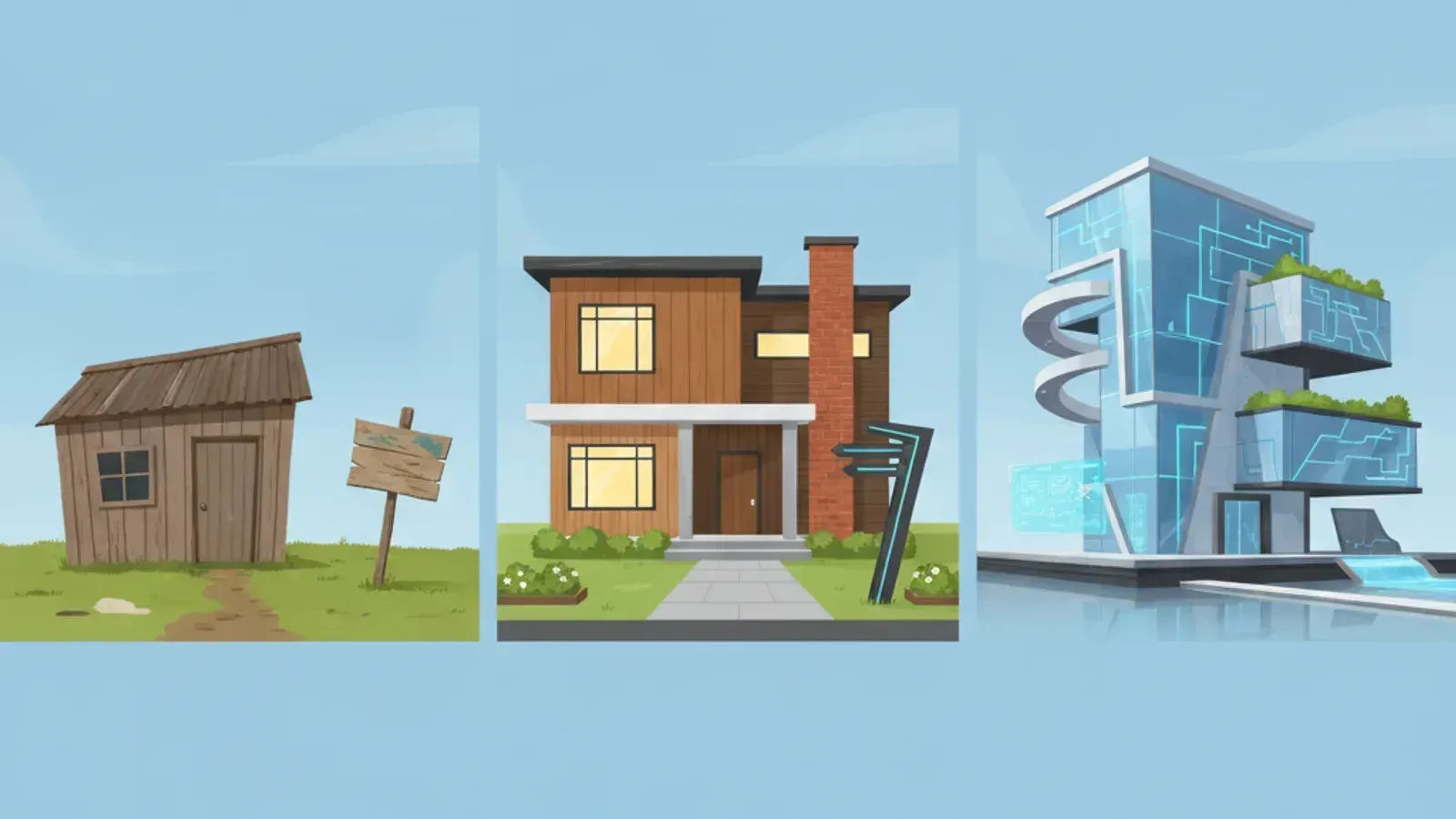
From a basic online brochure to a strategic digital product, each tier represents a different level of investment and capability.
Level 3: The Strategic Digital Product (The Custom-Engineered Solution)
This is where your website transcends being just a marketing tool and becomes a core part of your business operations or a proprietary digital product. The website development cost at this level reflects a deep investment in strategy, custom design, and robust engineering. This is not about getting online, it is about owning a competitive advantage.
- What it is: A fully custom, strategy-led, and expertly engineered digital product.
- Typical Cost: ₹4,00,000 to ₹15,00,000 or even more, depending on complexity.
- Realistic Timeline: 12 to 24+ weeks, often involving ongoing phases.
- What it includes:
- Comprehensive discovery phase: in-depth user research, competitor analysis, market positioning, and detailed strategic planning.
- Bespoke UI/UX design: custom wireframing, prototyping, and pixel-perfect design that perfectly aligns with your brand and user needs.
- Custom engineering: development using modern frameworks (e.g., Next.js, React) and a flexible headless CMS (e.g., Strapi) for ultimate scalability and control.
- Advanced, custom functionality: unique features, complex integrations with multiple third-party systems (CRMs, ERPs, custom APIs), user authentication, custom dashboards, e-commerce with advanced logic.
- Rigorous quality assurance: extensive testing, security audits, performance optimisation, accessibility compliance.
- Content strategy: guidance on content creation, information architecture tailored for your specific goals.
- Advanced SEO strategy: comprehensive keyword strategy, technical SEO implementation, ongoing monitoring.
- Scalable architecture: built to handle significant traffic and future growth without needing a complete overhaul.
- Post-launch support: ongoing maintenance, security updates, performance monitoring, and often a retainer for continuous improvements or new feature development.
- What it does not include:
- In theory, nothing that your business truly needs. This level covers everything required to build a leading-edge digital product that is a strategic asset. The 'excludes' are generally limited by the scope agreed upon during the extensive discovery phase.
- Who it fits:
- Established businesses needing a unique competitive edge or transforming their digital presence.
- Startups building a core product that requires custom functionality and a superior user experience.
- E-commerce platforms with complex business logic, bespoke features, or high transaction volumes.
- Organisations where the website is central to their operations and directly impacts revenue or critical business processes.
- Businesses that view their website as a strategic investment, not just a marketing expense.
This level is for businesses ready to make a significant, long-term investment in their digital future. It is about building a truly differentiating product that can evolve with your business and market.
Commonly Underestimated Cost Factors in Website Development Packages
Beyond the three tiers, several specific elements often surprise clients with their impact on the final website pricing. Understanding these can help you better prepare your budget and ask more informed questions.
- Content Production: This is perhaps the biggest hidden cost. Many clients assume they will 'just write the content themselves'. However, writing engaging, SEO-friendly, and conversion-focused copy is a specialised skill. Professional photography, videography, and graphic design also add significant expense. If an agency quotes for content, it is often a good sign they are thinking strategically. If not, budget for it separately.
- CMS versus Static: A static website, where every page is a fixed HTML file, is cheaper to build initially but impossible for a non-technical person to update. A Content Management System (CMS) such as WordPress, or a headless CMS like Strapi, allows you to manage content independently. This flexibility comes from the development of the CMS integration, custom fields, and a user-friendly backend, all of which add to the initial build cost.
- Depth of Testing: Basic testing might catch broken links. Comprehensive testing involves checking responsiveness across dozens of devices and browsers, optimising for loading speed, conducting security vulnerability assessments, and running user acceptance tests. This rigorous process ensures a polished, reliable, and secure website. It prevents costly issues down the line but requires significant time and expertise.
- Third-Party Integrations: Connecting your website to other services, like a Customer Relationship Management (CRM) system, email marketing platforms, payment gateways, booking systems, or custom APIs, adds complexity. Each integration requires development time, testing, and often ongoing maintenance to ensure data flows correctly and securely.
- Ongoing Maintenance and Support: A website is not a 'set it and forget it' asset. It needs regular updates (software, security patches), backups, performance monitoring, and occasional bug fixes. While some agencies offer a short warranty, long-term maintenance plans are crucial for security, performance, and future scalability. Do not overlook this essential recurring cost.
Each of these factors can significantly impact the overall website development cost. They are investments in the quality, longevity, and effectiveness of your digital presence.

A strategic digital product requires a cohesive team working together from strategy to engineering.
How to Decide: What Level of Website Do You Need?
Choosing the right level of investment is not about picking the cheapest or the most expensive option. It is about aligning your website with your business goals and current stage. Here are some questions to help you decide:
- What is the primary purpose of your website? Is it merely to provide information, generate leads, sell products, or serve as a core business tool?
- What is your long-term vision for the website? Do you anticipate significant growth, new features, or integration with other systems in the next 2-3 years?
- How important is a unique brand identity online? Do you need to stand out with bespoke design, or is a professional, albeit less unique, look acceptable?
- How often will your content need updating, and who will do it? Do you need a simple, intuitive CMS, or are you comfortable with a developer making changes?
- What is your budget, both initial and ongoing? Be realistic about what you can afford upfront and for future maintenance.
- What level of competition do you face? If your competitors have highly sophisticated websites, a basic site might not be enough to compete effectively.
If you are a new business with a tight budget and just need to establish an online presence, a Level 1 site might be sufficient. If you are a growing SME needing a professional platform to drive business, Level 2 is likely your sweet spot. If your website is your business, or a critical strategic asset that needs to outshine the competition with custom features and a flawless experience, then Level 3 is the appropriate investment.
What to Ask Any Agency Before Signing
Once you understand the different tiers, you can ask much sharper questions. This will help you compare quotes more accurately and ensure you are getting what you pay for, regardless of which agency you choose.
- "What does your 'discovery phase' involve, specifically?" Look for answers that include research, user journey mapping, and strategic planning, not just a project kickoff meeting.
- "Will the design be fully custom, or based on a theme/framework? If a theme, how much customisation is included?" This clarifies the originality of the design work.
- "What CMS will you use, and how easy will it be for my team to update content without developer help?" Understand the long-term usability for your content managers.
- "Could you detail your testing process? What types of testing do you perform (e.g., cross-browser, performance, security)?" This reveals their commitment to quality and reliability.
- "What is your process for integrating third-party tools, and what are the associated costs?" Clarifies how complex integrations are handled and priced.
- "What kind of post-launch support and maintenance plans do you offer, and at what cost?" Do not assume ongoing support is included. Get this in writing.
Asking these questions upfront will help you move past superficial comparisons and truly understand the value proposition of each quote. It empowers you to make an informed decision for your business.

Asking the right questions ensures you understand the true value of each website development quote.
The wide variation in website development cost in India is not a sign of agencies trying to overcharge. It is a reflection of vastly different approaches, levels of expertise, and deliverables. By understanding what drives these costs and what each tier offers, you can make a confident decision that genuinely serves your business goals. Choose the level that fits your ambition and ensures your website is a true asset, not just an expense.
If you are looking for a partner who can move from strategy to a shipped product without losing the thread, we are here to help. We build premium digital products with strategy, design, and engineering working as one.