
General
7 signs it's time to rebuild your website
Is your website holding your business back? Discover the seven clear indicators that it's time for a modern rebuild, helping you boost performance, rankings, and conversions.
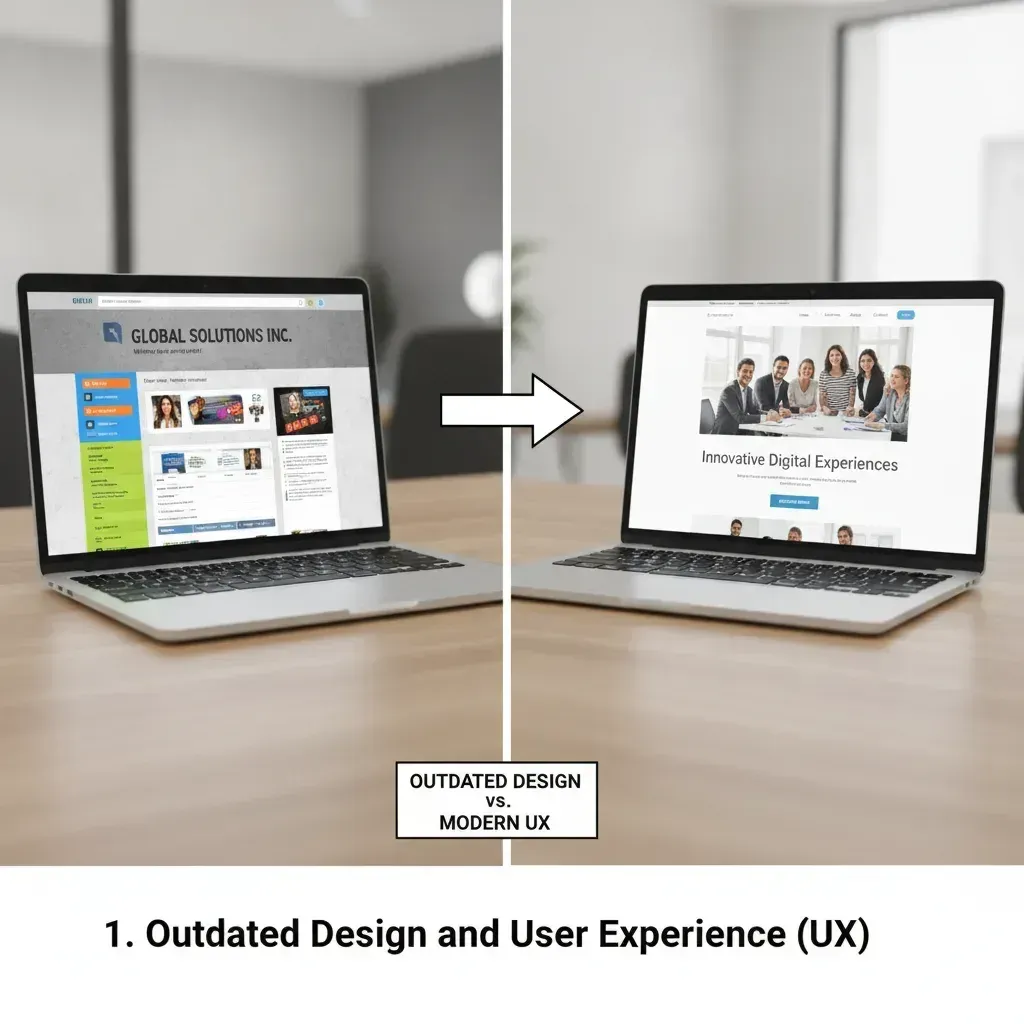
Imagine Sarah, the owner of a thriving artisanal coffee subscription service. Her business was booming, her coffee blend exceptional, and her social media engagement through the roof. Yet, when customers clicked through to her website to subscribe, something peculiar happened. The initial buzz faded, replaced by a tangible friction. Pages loaded slowly, the design felt a little off, and finding the 'subscribe' button was surprisingly difficult. Sarah’s website, once a proud digital storefront, was now a bottleneck, quietly eroding the very growth it was meant to support. It’s a common story, one we hear time and again from founders and marketing leads whose digital platforms just aren’t keeping pace with their ambitions.
For many businesses, their website is their most critical digital asset. It’s the front door, the sales team, the customer service hub, and the brand ambassador, all rolled into one. When it falters, the ripple effect can be felt across every aspect of the business. You might be asking yourself, "Is it time to rebuild my website?" It’s a significant question, and one that deserves a thoughtful answer. A rebuild isn't just about a new coat of paint; it's about re-engineering your digital foundation to serve your business goals more effectively. It’s about creating a platform that moves with you, not against you.
At Kraavon, we partner with product teams to build digital products that truly perform. We understand the frustration of a website that isn't pulling its weight, and we know the profound impact a well-engineered site can have. From strategy to design to engineering, we craft experiences that deliver. We’ve seen firsthand how a strategic rebuild can unlock new levels of growth and efficiency. Here are seven clear signs that it’s time to rebuild your website, complete with the symptoms, costs, and the modern solutions that can turn things around.
The telling signs your website needs a rebuild
1. Slow load times and poor Core Web Vitals
The digital world moves at lightning speed, and your website needs to keep up. One of the most immediate and frustrating symptoms of an ageing website is painfully slow load times. Does it feel like your site takes an eternity to appear on screen? Are visitors clicking away before your content even renders? This isn't just an inconvenience; it’s a critical performance issue. Google's Core Web Vitals (Largest Contentful Paint, First Input Delay, and Cumulative Layout Shift) are now key ranking factors, measuring how quickly your page loads, becomes interactive, and maintains visual stability. If your site is struggling with these metrics, it's a huge red flag.
The cost of a slow website is substantial and far-reaching. Firstly, you experience high bounce rates. Users are impatient; research shows that most will abandon a site if it takes longer than three seconds to load. Each bounce is a lost opportunity, a potential customer who never saw your offer. Secondly, Google actively penalises slow websites in search rankings. This means less visibility, fewer organic visitors, and a direct impact on your marketing efforts. A sluggish site signals a poor user experience, undermining trust and perceived professionalism. You are essentially paying to deter customers.
The fix involves a fundamental re-engineering of your site's performance. This includes optimising images and other media assets, implementing efficient code splitting, leveraging server-side rendering, and utilising Content Delivery Networks (CDNs). A modern rebuild prioritises performance from the ground up, ensuring your site is lightweight and fast. For some, a headless architecture can be a game-changer, decoupling the front-end (what users see) from the back-end (where content is stored). This separation allows for incredibly fast content delivery and a highly optimised user experience. It's about building speed into the very DNA of your digital presence.
2. Weak or falling search rankings
You've invested in great content, perhaps even some clever advertising, but your website barely shows up on Google. Or perhaps, worse, it's been steadily dropping down the search results pages for your key terms. Your competitors, meanwhile, seem to be consistently outranking you, capturing the organic traffic you desperately need. This isn't just about vanity; it's about visibility and discoverability. If potential customers can't find you when they're actively searching for your products or services, your business is missing out on its most valuable leads.
The financial cost of weak search rankings is staggering. It translates directly into lost visibility and, consequently, fewer potential customers discovering your business. Organic search is often the most cost-effective channel for lead generation. If your site isn't optimised, your marketing budget might be working harder than it needs to, pushing paid ads to compensate for what free search traffic should be delivering. Each missed click from a search engine represents a lost opportunity for conversion and revenue. Your website isn't working as a passive lead-generation machine; it's a barrier.
Addressing this requires a comprehensive technical SEO audit and a strategic approach to optimisation. This means ensuring your site structure is clear for search engine crawlers, implementing proper schema markup, optimising meta titles and descriptions, and ensuring your content is relevant and high-quality. A modern rebuild provides the perfect opportunity to bake SEO best practices into the very foundation of your site. We ensure the underlying code is clean, the site loads quickly (which Google loves), and the user experience is intuitive. This holistic approach helps your website climb the rankings and stay there, turning it into a powerful tool for attracting new business organically. It’s about building a site that search engines want to show to their users.
3. A design that looks dated next to competitors
Take a look at your website and then at those of your closest competitors. Does yours feel like it’s from a different era? Are you seeing cluttered layouts, outdated typography, or generic stock imagery that doesn’t truly represent your brand? Perhaps your competitors boast sleek, modern interfaces, intuitive navigation, and captivating visuals. A dated design isn't just an aesthetic problem; it’s a brand perception issue. In today’s fast-paced digital landscape, design communicates trustworthiness and relevance almost instantly.
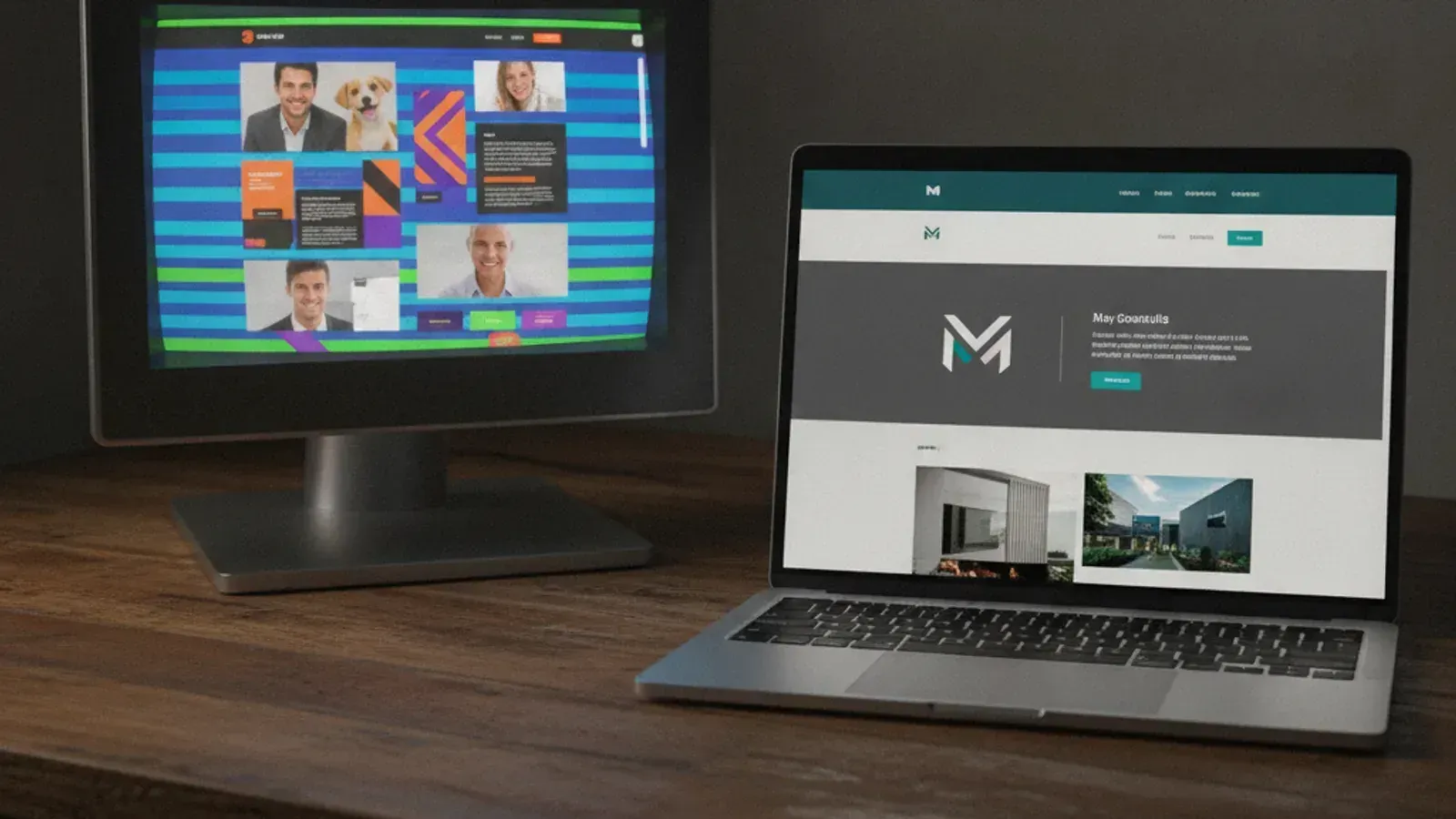
Does your website reflect your brand's true potential, or does it feel like a relic?
The cost of a dated design is a critical loss of credibility and trust. Visitors make snap judgements about your business based on your website's appearance. If it looks old-fashioned, they might assume your products or services are similarly out of date, or that you don't care enough to invest in your own digital presence. This can drive potential customers straight into the arms of competitors who present a more contemporary and professional image. It directly undermines your brand value and makes it harder to convert visitors into loyal customers. You're fighting an uphill battle before you've even had a chance to present your value.
A modern rebuild offers the perfect opportunity for a complete user experience (UX) and user interface (UI) redesign. This isn't just about making things pretty; it's about crafting an intuitive, engaging, and visually appealing experience that aligns with your brand's current aspirations and future vision. A professional design studio, like Kraavon, can work with you to create a contemporary, user-centric website that not only looks stunning but also guides users seamlessly through their journey. We focus on clear calls to action, easy navigation, and visuals that tell your story effectively. This ensures your website becomes a true reflection of your brand's quality and innovation, building immediate trust and rapport with your audience.
4. A site that is hard to update
Does the thought of updating your website fill you with dread? Perhaps changing a line of text, adding a new product to your catalogue, or publishing a fresh blog post feels like a complex, multi-day task. Maybe you constantly need to involve a developer for even the smallest edits, waiting days or weeks for simple changes. This symptom often points to an outdated or overly bespoke Content Management System (CMS) that is no longer user-friendly or efficient. Your website should be an agile tool for your marketing and content teams, not a bureaucratic hurdle.
The cost of a hard-to-update website is significant. Firstly, your content quickly becomes stale. If it's difficult to add new articles, update product descriptions, or refresh landing pages, your site will inevitably fall behind. This impacts both your SEO (search engines favour fresh, relevant content) and your customer engagement. Secondly, you waste valuable time and resources. Every time you need a developer for a minor edit, you're incurring costs and delaying critical marketing campaigns. This lack of agility means you can't respond quickly to market changes, competitor actions, or new business opportunities. Your website becomes a liability, not an asset.
The solution lies in implementing a modern, flexible, and user-friendly CMS. At Kraavon, we frequently help clients move off legacy systems onto more robust, intuitive platforms, often leveraging headless CMS solutions. A headless CMS separates the content management backend from the front-end presentation layer, giving your team incredible flexibility. It empowers your marketing and content teams to manage, create, and publish content independently, without needing constant developer intervention. This allows for rapid updates, agile content strategies, and a much more efficient workflow. It transforms your website from a rigid structure into a dynamic, adaptable tool that truly serves your business needs.
5. Poor mobile experience
Pick up your phone and visit your website. How does it look? Is the text tiny and unreadable, requiring constant pinching and zooming? Are buttons too small to tap accurately, leading to frustrating misclicks? Does navigation break or disappear entirely on a smaller screen? If your website isn't performing flawlessly on mobile devices, you're facing a significant problem. Mobile internet usage has long surpassed desktop, with a vast majority of users now accessing the web from their smartphones and tablets. A website that isn't mobile-friendly is simply not fit for purpose in today's digital landscape.

The modern web is mobile-first. Is your website welcoming or frustrating your mobile users?
The cost of a poor mobile experience is immense. You are effectively alienating the majority of your potential audience. Every frustrated mobile user is a lost lead or a missed sale. Furthermore, Google explicitly prioritises mobile-first indexing, meaning its algorithms primarily use the mobile version of your content for ranking. If your mobile site is subpar, your search rankings will suffer across the board. This isn't just about user preference; it's a fundamental requirement for discoverability and success in the modern digital world. You are actively pushing customers away and being penalised by the very search engines meant to help you.
A comprehensive rebuild offers the opportunity to implement responsive design principles and a mobile-first development approach. This means designing and building your website to adapt seamlessly to any screen size, from the largest desktop monitor to the smallest smartphone. Elements like typography, image scaling, navigation, and interactive components are all optimised for touch and varying screen dimensions. This isn't an add-on; it's a fundamental aspect of any modern website build. By prioritising the mobile experience, you ensure accessibility for all users, improve your SEO, and create a smooth, intuitive journey regardless of how your customers access your site. It’s about meeting your audience where they are, on the devices they use most.
6. Low conversion or enquiries
You’re getting traffic to your website, perhaps even a decent volume, but visitors aren’t taking the desired actions. They're not filling out enquiry forms, signing up for your newsletter, downloading your lead magnet, or making purchases. They visit, they browse, and then they leave without converting. This is one of the most disheartening symptoms, as it suggests your marketing efforts are attracting attention, but your website isn't effectively guiding users towards a valuable outcome for your business. It's like having a busy shop with no one buying anything.
The cost of low conversion rates is direct and impactful. It means wasted marketing spend; you’re investing in attracting visitors, but those investments aren’t translating into tangible business results. This leads to missed sales opportunities, reduced customer acquisition, and ultimately, a negative impact on your bottom line. Your website ceases to be an effective business tool and instead becomes an expensive brochure that isn't generating a return on investment. It's not just an aesthetic problem or a technical glitch; it's a fundamental failure of your digital strategy to convert interest into action.
Addressing low conversions requires a deep dive into user experience (UX) and conversion rate optimisation (CRO). A rebuild provides a blank canvas to conduct a thorough UX audit, identify friction points in the user journey, and implement clearer, more compelling calls to action (CTAs). We can design optimised conversion funnels, ensuring that every page guides the user towards the next logical step. This might involve A/B testing different layouts, refining your messaging, or simplifying forms. At Kraavon, our approach is always data-informed, using insights from user research and analytics to build a site that is specifically engineered to achieve your business objectives. We focus on creating a persuasive and intuitive experience that encourages visitors to take that crucial next step, turning passive browsers into active customers.
7. A platform that cannot scale or integrate
Your business is growing, and with that growth comes increased demands on your digital infrastructure. Perhaps your website buckles under heavy traffic during peak seasons or major marketing campaigns. You might find it impossible to seamlessly connect your website to essential business tools like your CRM, email marketing platform, e-commerce system, or ERP. Adding new features, functionalities, or expanding into new markets feels like an insurmountable technical challenge. This indicates that your website's underlying platform is rigid and outdated, acting as a constraint on your business rather than an enabler.
The cost of a platform that cannot scale or integrate is a significant impediment to future growth. Lost sales during peak periods due to crashes or slowdowns are immediately impactful. Beyond that, the inability to automate processes through integration leads to manual data entry, inefficiencies, and errors across your operations. This wastes valuable staff time and prevents you from gaining a holistic view of your customer data. Ultimately, a non-scalable platform bottlenecks your entire business, preventing you from capitalising on new opportunities and keeping you from truly innovating. You are forced to operate within the limits of your technology, rather than letting technology empower your expansion.
The solution lies in adopting a modern, flexible architecture, often leveraging cloud hosting and API-first design principles. A modern rebuild ensures your site can handle increased traffic without faltering, providing a stable foundation for growth. Headless CMS solutions, which Kraavon often implements, are particularly adept at addressing this. By decoupling the front-end presentation from the back-end content and data, they allow for incredible flexibility in integration. You can connect your website to virtually any third-party service via APIs, creating a truly integrated digital ecosystem. This not only streamlines operations but also future-proofs your investment, allowing you to add new features, expand into different channels (like mobile apps or IoT devices), and scale your business without being constrained by your website's core platform. We specialise in building these robust, scalable platforms that grow with your ambition.
The path forward: a modern rebuild with Kraavon
Recognising these signs is the first step. The next is understanding that a modern website rebuild is more than just a technical upgrade; it's a strategic investment in your business's future. It's about crafting a digital product that works as hard as you do, that aligns with your vision, and that supports your growth objectives. A well-executed rebuild transforms your online presence from a source of frustration into a powerful engine for success.
At Kraavon, we partner with founders and product teams to make this transformation seamless and impactful. We don't just hand off files; we become an extension of your team, moving from strategy to design to engineering as one cohesive unit. We bring our expertise in building fast, SEO-ready, and highly performant websites, often leveraging headless architectures where they best fit your needs. We've helped numerous businesses move off legacy platforms, experiencing firsthand the challenges and triumphs of modern re-platforming.
- We build websites that load quickly, meeting Core Web Vitals and delighting users.
- We engineer sites for maximum search engine visibility, driving organic traffic.
- We design intuitive, modern user experiences that reflect your brand's quality and credibility.
- We empower your team with easy-to-use content management systems.
- We ensure your site looks and performs perfectly on every device, especially mobile.
- We optimise conversion pathways, turning visitors into valuable leads and customers.
- We create scalable, integrated platforms that grow with your business and connect seamlessly with your other tools.
Your website should be a powerful asset, not a nagging liability. If any of these seven signs resonate with you, it might just be time to rebuild your website and unlock its full potential. Let's make your digital platform a true champion for your business.
Frequently asked questions
How long does a typical website rebuild take?
The timeline for a website rebuild varies significantly based on complexity, features, and content volume. A small, simple site might take 2-4 months, while a large, feature-rich platform could take 6-12 months or more. At Kraavon, we work closely with clients to establish realistic timelines and milestones, ensuring transparency throughout the process. Our iterative approach often means you see progress and can provide feedback regularly.
What is a 'headless CMS' and why might I need it?
A headless CMS separates the content management backend (where you create and store content) from the front-end presentation layer (where your content is displayed to users). You might need it if you require extreme performance, want to deliver content to multiple platforms (website, mobile app, IoT devices) from a single source, or need a highly flexible, scalable architecture with seamless integrations. It offers greater agility and a future-proof approach compared to traditional monolithic CMS platforms.
Will a rebuild affect my existing SEO rankings?
A rebuild, if not handled carefully, can temporarily affect SEO. However, when done correctly, it should significantly improve your SEO. We implement a robust SEO migration strategy, including comprehensive redirects, updated sitemaps, and careful content mapping, to minimise any negative impact and ensure a smooth transition. Our goal is always to improve your search visibility post-launch, capitalising on a faster, more optimised new platform.
What budget should I allocate for a website rebuild?
Website rebuild costs can range widely, from tens of thousands of pounds for smaller, bespoke projects to hundreds of thousands for complex enterprise solutions. Factors like the number of pages, custom features, integrations, and the level of design and engineering required all play a role. We focus on building solutions that provide genuine ROI, and we work to align our approach with your budget and business objectives, providing clear breakdowns of costs from the outset.
If these signs resonate with your current website experience, it's probably time for a change. Let's have a conversation about how a strategic website rebuild can propel your business forward. We'd love to learn about your goals and explore how Kraavon can help you achieve them.