
Development
A booking form takes an afternoon. A product takes engineering.
Many founders envision a simple booking form, but building a production-ready product is far more complex. This article explores the hidden engineering decisions that transform a basic idea into a robust, reliable system.

Picture this: a founder, brimming with excitement, sketches out a brilliant idea on a napkin. It is a booking system, perhaps for a local barbershop or a personal trainer. The user interface seems straightforward. A few fields for name, time, and service. A button to confirm. "This should take an afternoon," they might think, "a weekend at most." This initial vision often focuses solely on the visible frontend. It feels like a quick win, but this perspective overlooks the true challenge of building a production-ready product.
That simple booking form is indeed the easy ten percent. The real work, the other ninety percent, is the engineering needed to create a system that can reliably run a business. It must handle real-world chaos, edge cases, and future growth. It needs to tell the truth, always, even when the shop is full, a barber is late, and someone walks in off the street without an appointment.
At Kraavon, we partner with founders and product teams. We help them move from strategy to a shipped product without losing the thread between design and code. Our work with Trimsmith, a barbershop in Kochi, India, perfectly illustrates this distinction. What started as a concept for a booking site evolved into a comprehensive operations dashboard and a multi-tenant API. It is a fantastic example of the nuanced decisions involved in building a truly robust system. Let us look at six crucial engineering decisions from the Trimsmith build. These lessons are vital for anyone serious about building a production-ready product.
The Hidden Depths of a “Simple” Booking System
A booking form on a website looks simple. It presents fields for a user to input information. The user clicks submit, and an appointment is made. What could be so hard? The complexity arises when this form interacts with a live business. It needs to manage availability, prevent conflicts, handle payments, and serve multiple users. It must also accommodate the staff who run the business. This is where the engineering begins to truly matter.
A live system is not just a form. It is a dynamic entity that needs to reflect reality in real time. It needs to remain consistent under load. It needs to be secure against misuse. Most importantly, it needs to be reliable. These requirements push us beyond simple data entry into the realm of thoughtful system design. It is about anticipating problems before they ever occur in the real world.
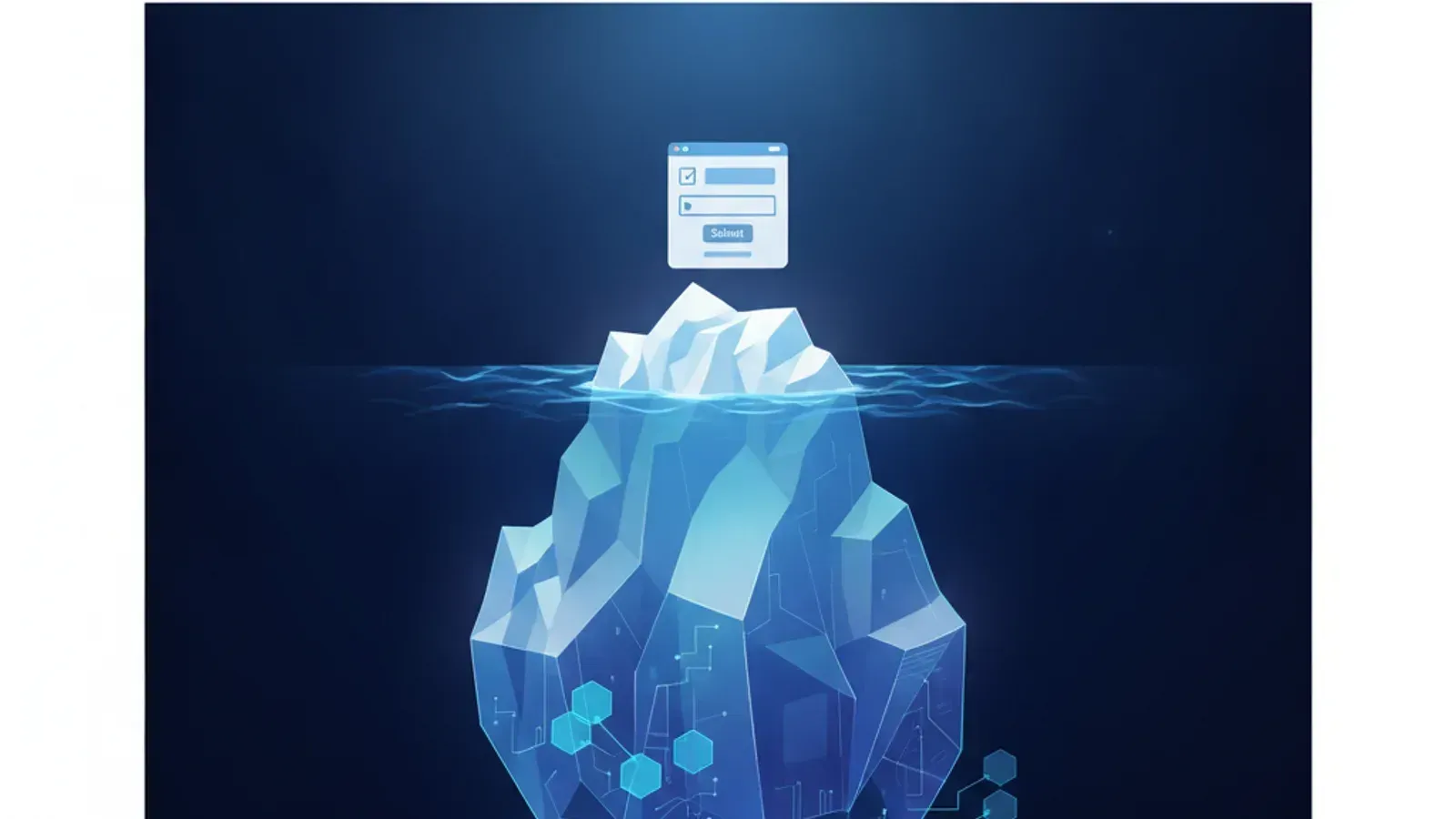
The visible booking form is a small fraction of the engineering needed for a production-ready product.
Lesson 1: Correctness Belongs in the Database, Not the App
Consider the core function of a booking system: ensuring a single barber is not double-booked for the same time slot. Many developers might implement this check in their application code. They would query the database to see if a slot is available. If it is, they would then insert the new booking. This approach seems logical at first glance, but it has a critical flaw.
What happens if two users try to book the exact same slot at the exact same moment? In a fraction of a second, both application instances might query the database, find the slot open, and then both proceed to insert a booking. This is a classic 'race condition'. It leads to double-bookings, angry customers, and a frustrated barbershop owner. This is precisely the kind of error that undermines trust in a system.
For Trimsmith, we ensured this fundamental correctness directly within the database. PostgreSQL offers powerful features for this, specifically 'exclusion constraints'. This feature allows you to define rules that the database will enforce, making certain conditions impossible. Even if two application instances try to insert conflicting data simultaneously, the database will only allow one. The other will fail gracefully, ensuring data integrity.
CREATE EXTENSION btreegist;

ALTER TABLE bookings
ADD CONSTRAINT nodoublebooking
EXCLUDE USING GIST (
 barberid WITH =,
 tsrange(starttime, endtime) WITH &&
);
This EXCLUDE constraint guarantees that for a given barber_id, no two time ranges (tsrange) can overlap (&&). This database-level enforcement is immutable and reliable. It removes the burden of handling complex race conditions from the application code. It is a foundational principle for building a production-ready product where data integrity is paramount.
Lesson 2: Some Numbers Should Be Simulated, Not Averaged
Another common request for booking systems is to display wait times. A simple approach might be to calculate the average service time for a haircut. Then, you just add that average to the current time. For example, if a haircut averages 20 minutes, the next available slot is 20 minutes from now. This often leads to inaccurate estimates and frustrated customers. Real-world barbershops do not operate on perfect averages.
Trimsmith needed accurate wait times. We could not simply say, "average 20 minutes." What if one barber is fast and another is slow? What if a complex service like a shave takes longer? What if a walk-in customer is accommodated? The system needed to reflect the actual state of the shop, not a statistical guess.
Our solution involved a more sophisticated model. We simulated the actual state of each barber's chair. This meant tracking the expected start and end times for each booked service. We considered the specific service duration and even built in small buffers between appointments. When a new booking or walk-in occurred, the system would find the actual next available slot for a specific barber, or the next available barber overall, by running a quick simulation of the shop's schedule.
This approach, while more complex to engineer, provides far greater accuracy. It allows the system to give a truthful estimate of availability. It improves customer satisfaction and helps the barbershop manage its flow effectively. Relying on simple averages for critical real-time information can undermine the utility of your product. Building a production-ready product means grappling with the nuances of real-world data and behavior.
Lesson 3: Permission and Reach Are Separate Questions
When building systems with different user roles, it is tempting to think of permissions in a flat way. For instance, a staff member has 'admin' rights, so they can 'view all bookings'. But what if you have multiple shops, or multiple business units? Does 'admin' mean they can view all bookings across all shops? Or just bookings for their specific shop?
For Trimsmith, we knew the system would eventually expand to multiple locations. A barber or manager at one Trimsmith branch should not be able to see the bookings or customer data for another branch. This requires separating the concept of 'permission' (what you may do, e.g., view bookings) from 'reach' (where you may do it, e.g., within a specific shop or tenant context).
Our system implemented server-side checks for both. Every request to access or modify data included a check for the user's permissions and their assigned scope. If a user tried to view bookings, the system would first check if they had the view_bookings permission. Then, it would check if the booking's shop_id matched the shop_id associated with the user. If either failed, the access was denied.
function checkAccess(user, resource) {
 if (!user.permissions.includes(resource.action)) {
 return false; // User lacks permission for this action
 }
 if (resource.shopid && user.shopid !== resource.shop_id) {
 return false; // User cannot access resources outside their assigned shop
 }
 return true;
}
This granular control is vital for data security and privacy. It prevents accidental or malicious access to sensitive information. It also lays the groundwork for a robust multi-tenant architecture. This foresight is a cornerstone of building a production-ready product. It protects your customers' data and your business's integrity from day one.
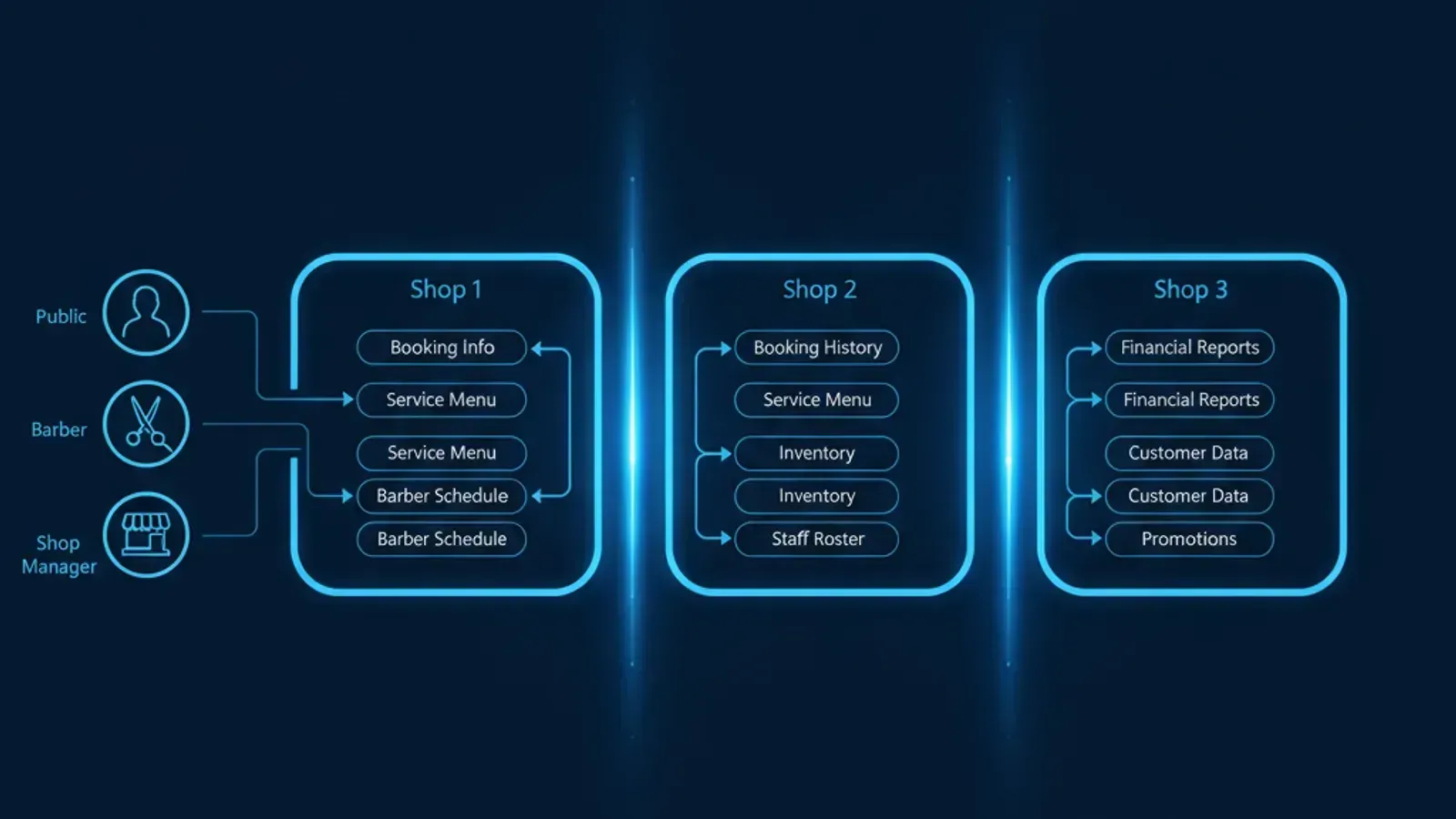
Permissions define 'what you can do', while 'reach' defines 'where you can do it'. Both are crucial for security.
Building for Scale: Anticipating the Future
Many initial product ideas focus on solving a problem for a single user or a single instance. This is a natural starting point. However, if your vision extends beyond that first customer, or if you anticipate growth, then engineering needs to account for this from the very beginning. Retrofitting scalability or multi-tenancy is almost always more expensive and complex than designing for it upfront.
Thinking ahead involves making architectural choices that support future expansion. It means considering how your system will handle more data, more users, and more diverse requirements. This proactive approach is a hallmark of truly production-grade engineering. It transforms a one-off project into a platform ready for growth.
Lesson 4: Multi-Tenancy Belongs in the First Schema
When we started Trimsmith, it was for one barbershop. However, Kraavon and the founder had a vision for expansion. We knew there was potential for the system to be adopted by multiple Trimsmith branches, or even by other barbershop chains. This meant the product needed to support 'multi-tenancy' from day one. Multi-tenancy means one instance of the software serves multiple distinct customers (tenants), each with their own isolated data.
The common mistake is to build for a single tenant first. Then, once the second customer comes along, realize you need to rewrite significant portions of your database schema and application logic. This 'rewrite' is almost always a huge, costly, and risky undertaking. It often involves painful data migrations and extensive testing.
For Trimsmith, every relevant table in our database schema included a shop_id (or tenant_id) column from the very beginning. Bookings, services, customers, staff, payments, all were associated with a specific shop. This seemingly small decision has profound implications. It meant that every database query automatically included a WHERE shop_id = :current_shop_id clause. This ensured data isolation without complex application logic to enforce it.
Designing for multi-tenancy from the start saves immense amounts of time and money down the line. It ensures that the system is inherently capable of scaling to serve many customers securely and efficiently. It is a critical consideration for building a production-ready product that aims for broader market adoption. The second customer is truly where a project transforms into a product, and your architecture must be ready for it.
Lesson 5: Money and Time Are Unforgiving
Two areas that consistently cause headaches in software development are handling money and time. These might seem trivial, but they are deceptively complex. Getting them wrong leads to financial discrepancies, missed appointments, and severe trust issues with your users.
- Money: Integer Minor Units When dealing with currency, never use floating-point numbers (like
floatordouble). These data types are designed for scientific calculations and have inherent precision issues. A simple0.1 + 0.2might not equal0.3exactly. For financial systems, this is unacceptable.
Instead, for Trimsmith (and any payment system), we store all monetary values as integer 'minor units'. For Indian rupees, this means storing values in paise (hundredths of a rupee). So, Rs 100.50 becomes 10050. All calculations are done using integers, which are perfectly precise. Only at the very last moment, for display, is it converted back to a decimal representation. This guarantees accuracy and prevents subtle financial errors from creeping into the system.
- Time: Per-Location Timezones Time is even trickier. A barbershop in Kochi operates in a specific timezone. Its customers might be in the same timezone, or they might be booking from another part of the world. Simply storing
datetimevalues without timezone information, or assuming everything is local time, is a recipe for disaster. This becomes especially true when your system expands to multiple locations in different timezones.
For Trimsmith, all times are stored in the database in Coordinated Universal Time (UTC). This is the global standard. When a user views the booking calendar, or when a staff member sees an appointment, the system converts the UTC time to the specific local timezone of that particular barbershop. This conversion happens dynamically based on the shop_id and its configured timezone. When a user makes a booking, their input (which is in their local time) is immediately converted to UTC before storage.
This approach ensures that bookings are always recorded accurately relative to each other globally. It also ensures that a 2:00 PM appointment always means 2:00 PM local time at the shop, regardless of where the booking was made or viewed. Money and time are two areas where precision is non-negotiable for building a production-ready product. Any shortcuts here will inevitably lead to significant problems.
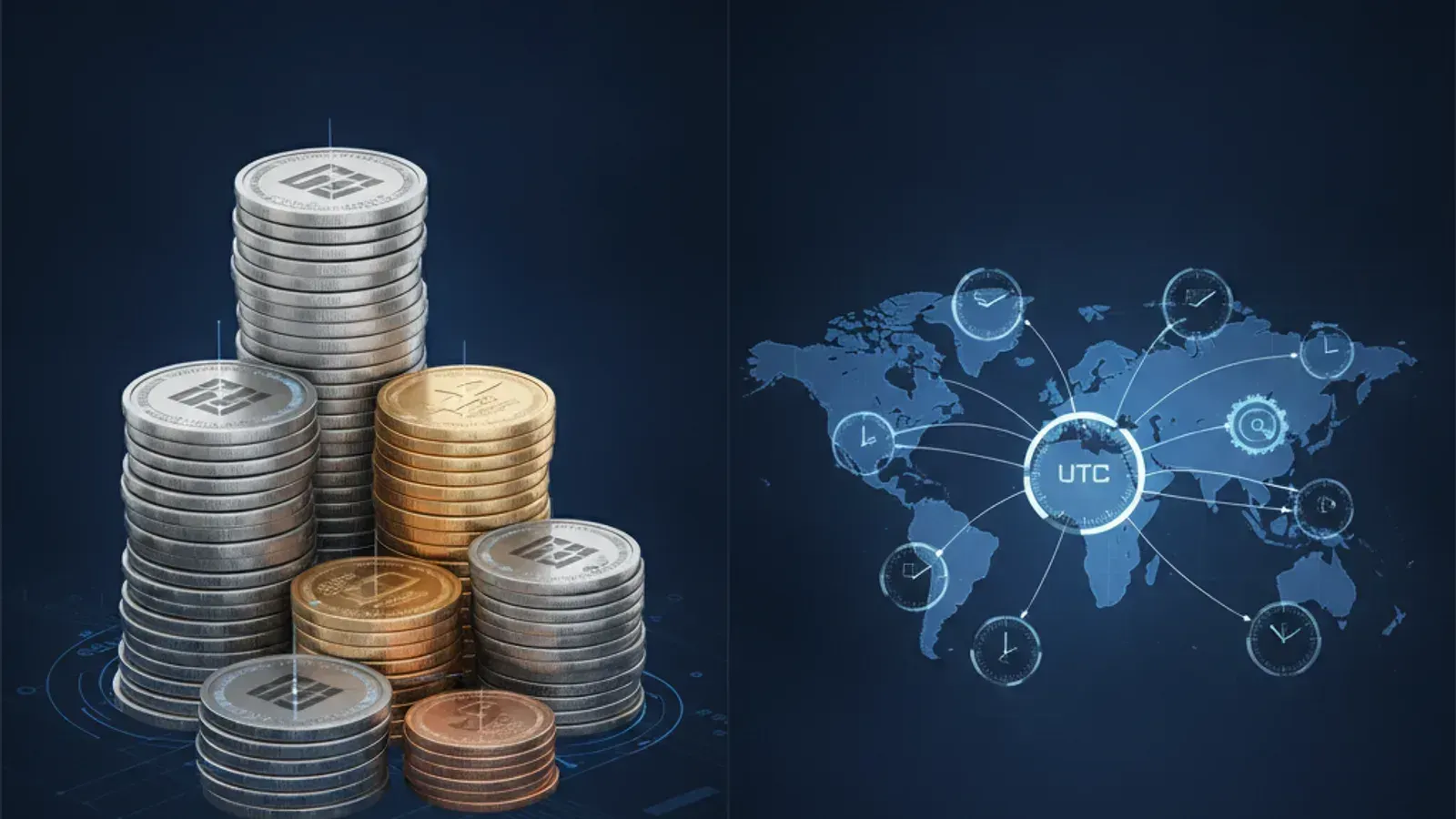
Handling money with integer minor units and time with per-location timezones prevents critical errors.
Lesson 6: Architecture Often Arrives from Constraints
Sometimes, the best architectural decisions are born out of specific constraints. For Trimsmith, we built not just a public-facing booking website, but also an internal operations dashboard. This dashboard allowed barbers and managers to view their schedules, manage walk-ins, update services, and handle various administrative tasks. The constraint was clear: this operations dashboard needed to be highly secure and accessible only to authorized staff. The underlying business logic, however, was shared with the public booking site.
Our solution was to separate the core business logic into a dedicated API (Application Programming Interface) layer. This API became the single source of truth for all booking, availability, and shop management operations. Both the public booking website and the internal operations dashboard communicated with this API. This meant the database itself was never directly exposed to the public internet. Only the API, protected by authentication and authorization layers, could interact with the database.
This architectural choice offered several benefits. First, it significantly enhanced security by creating a protective layer between the public internet and sensitive data. Second, it enforced a clean separation of concerns. The API focused solely on business rules, while the frontends focused on user experience. Third, it made the system incredibly flexible. We could easily add new clients, like a future mobile app, without rewriting core logic. They would simply connect to the existing API.
Good architecture is not always about grand, abstract designs. Often, it emerges from practical needs and constraints. Moving the domain logic behind an API kept the database off the public internet, and it made the entire system more secure, maintainable, and scalable. This type of thoughtful design is essential for building a production-ready product that can adapt and grow over time.
From Demo to Business Critical: What “Production-Grade” Really Means
The gap between a basic booking form and a system like Trimsmith is immense. A form built in an afternoon might look functional, but it lacks the robustness required for a real business. A production-ready product is more than just a collection of features. It is a cohesive, resilient, and truthful system. It stands up to real-world demands, day in and day out. It is the difference between a prototype and an engine that drives a business.
Being 'production-grade' means the system is: reliable, ensuring uptime and consistent performance. It is secure, protecting sensitive data and user privacy. It is scalable, capable of handling increased load and future expansion. It is correct, always reflecting the true state of the business. And it is maintainable, allowing for future updates and improvements without breaking existing functionality. These are the characteristics that underpin any successful digital product.
These aren't optional extras. They are fundamental requirements for anything a business relies on. Investing in sound engineering from the outset saves countless hours of debugging, refactoring, and crisis management later. It builds trust with your users and confidence in your operations. This is the essence of building a production-ready product.

A production-grade product is a robust ecosystem, not just a collection of features.
At Kraavon, we understand that building a production-ready product requires deep expertise across strategy, design, and engineering. We work in small, senior teams to ensure context is never lost. We move from initial concept to a shipped, robust product. We build every engagement around your specific product needs, not a template. Every deliverable is meant to be owned by your team long after we are gone. Our goal is to empower you with a product that truly works.
Frequently Asked Questions About Building a Production-Ready Product
- How long does a real build take? A truly production-ready product, even with seemingly simple features, rarely takes just a few weeks. Depending on scope, a minimum viable product (MVP) with solid engineering foundations often takes 3-6 months. More complex systems can take much longer. This timeframe accounts for meticulous planning, design, robust engineering, and rigorous testing.
- When should one invest in production-grade engineering? You should invest in production-grade engineering as soon as you are serious about building a sustainable business around your product. If your product needs to handle real users, real money, or real operations, then the investment in quality engineering is non-negotiable from the start. Postponing it leads to costly rewrites and potential business failure.
- What exactly does "production-grade" mean in practice? In practice, it means your product is reliable, secure, scalable, maintainable, and correct. It means anticipating failure points and designing for resilience. It means rigorous testing. It means thoughtful architecture that supports future growth. It means the system is built to last and to operate without constant manual intervention or catastrophic failures.
- What's the first step for a founder considering building a production-ready product? The first step is often a discovery and strategy phase. This involves deeply understanding the problem, defining the core user needs, and mapping out the technical requirements. It is about asking the tough questions upfront. This allows for informed architectural decisions before writing a single line of production code. This strategic alignment is key to an efficient and successful build.
A simple booking form is a start, but building a production-ready product requires expertise and foresight. We help founders and product teams navigate this complexity. Ready to build something truly robust? Discover how we can partner with you on product strategy, design, and engineering. You can also read the full story of our work on Trimsmith.