
Design
AI Can Generate Screens. Who Designs the Experience?
AI tools now produce polished screens in seconds, a genuinely useful advancement. However, a screen is merely a surface; a true experience encompasses the entire user journey, requiring a depth of human understanding AI cannot replicate.
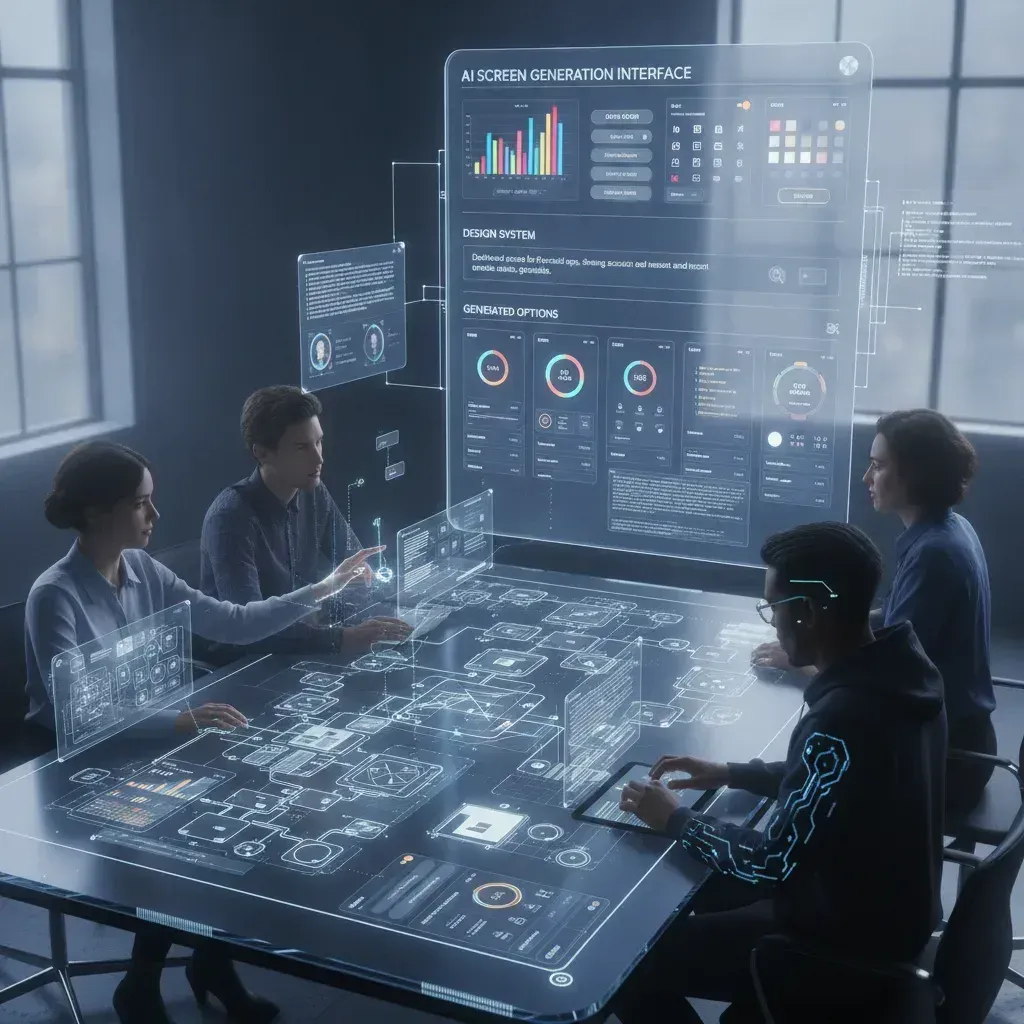
Picture this: you have an idea, a nascent spark for a new digital product. You feed a few prompts, perhaps some existing brand guidelines, into an AI product design tool. Moments later, your screen fills with polished, aesthetically consistent user interface layouts. Buttons, text fields, navigation bars, all perfectly aligned and styled. The speed is frankly astonishing. It feels like magic, doesn't it?
This ability for AI to generate screens so rapidly is a genuine leap forward. It accelerates the early stages of visual design, pushing pixels around at a pace no human could match. For founders and product leaders, it offers a tantalising glimpse of a future where design bottlenecks might be a thing of the past. The initial 'wow' factor is undeniable, and the utility is clear.
Yet, as you click through these pristine, AI-generated designs, a subtle question begins to form in your mind. Something feels... incomplete. The screens are beautiful, functional even, but do they tell a story? Do they anticipate the nuances of human behaviour? Do they truly resonate with your user's unspoken needs and emotions? This is the crucial distinction: AI can create screens, but designing a truly compelling experience still requires a distinctly human touch.
The Illusion of Completion: A Screen is Not an Experience
AI tools excel at the surface level. They can take design patterns, analyse vast datasets of existing interfaces, and generate variations that adhere to best practices for layout and visual hierarchy. They are brilliant at ensuring consistency, applying a style guide, and even suggesting common UI components. They give you a polished snapshot.
A 'screen' is essentially a static canvas, a single frame in a much larger narrative. It shows you what something looks like at one particular moment. Think of it as a beautifully rendered still photograph. It captures a scene, a composition, and perhaps even a mood. It is a tangible output, visually appealing and often well-structured.
An 'experience', however, is an entirely different beast. It is the full journey a user undertakes, from the moment they first encounter your product to their ongoing engagement. It includes the emotions they feel, the problems they solve, the frustrations they overcome, and the delights they discover. It is a sequence of actions, decisions, and feelings, not just a collection of pixels. It is the full motion picture, with a plot, characters, and an emotional arc.
The gap between generating a screen and designing a truly resonant experience is where products either succeed spectacularly or fade into obscurity. This chasm is not merely technical; it is fundamentally human. It requires empathy, foresight, and a deep understanding of psychology. This is where AI product design reaches its current limits.
- The full journey: How users navigate from one screen to the next, and what happens in between.
- Emotional tone: The subtle cues that make a product feel trustworthy, joyful, efficient, or frustrating.
- Edge cases and errors: How the system responds when things go wrong, or when users deviate from the 'happy path'.
- Information architecture: The underlying structure that makes information discoverable and understandable.
- Micro-interactions: The small animations and feedback loops that create a sense of responsiveness and delight.
- User mental models: Aligning the product's design with how users already expect things to work.
- Strategic decisions: What features to include, what to omit, and why these choices matter for the overall business and user goals.
Beyond the Pixels: What Truly Makes a Product Resonate?
Resonant products don't just look good; they feel right. They anticipate needs, solve real problems, and often delight in unexpected ways. They become indispensable parts of people's lives. This depth comes from understanding the 'why' behind the 'what', a layer of insight that current AI models simply cannot access or replicate.
It requires a designer to step into the user's shoes, to feel their pain points, to understand their motivations, and to predict their reactions. This form of deep, contextual understanding is the bedrock of truly great design. It is the difference between a product that works and a product that thrives.
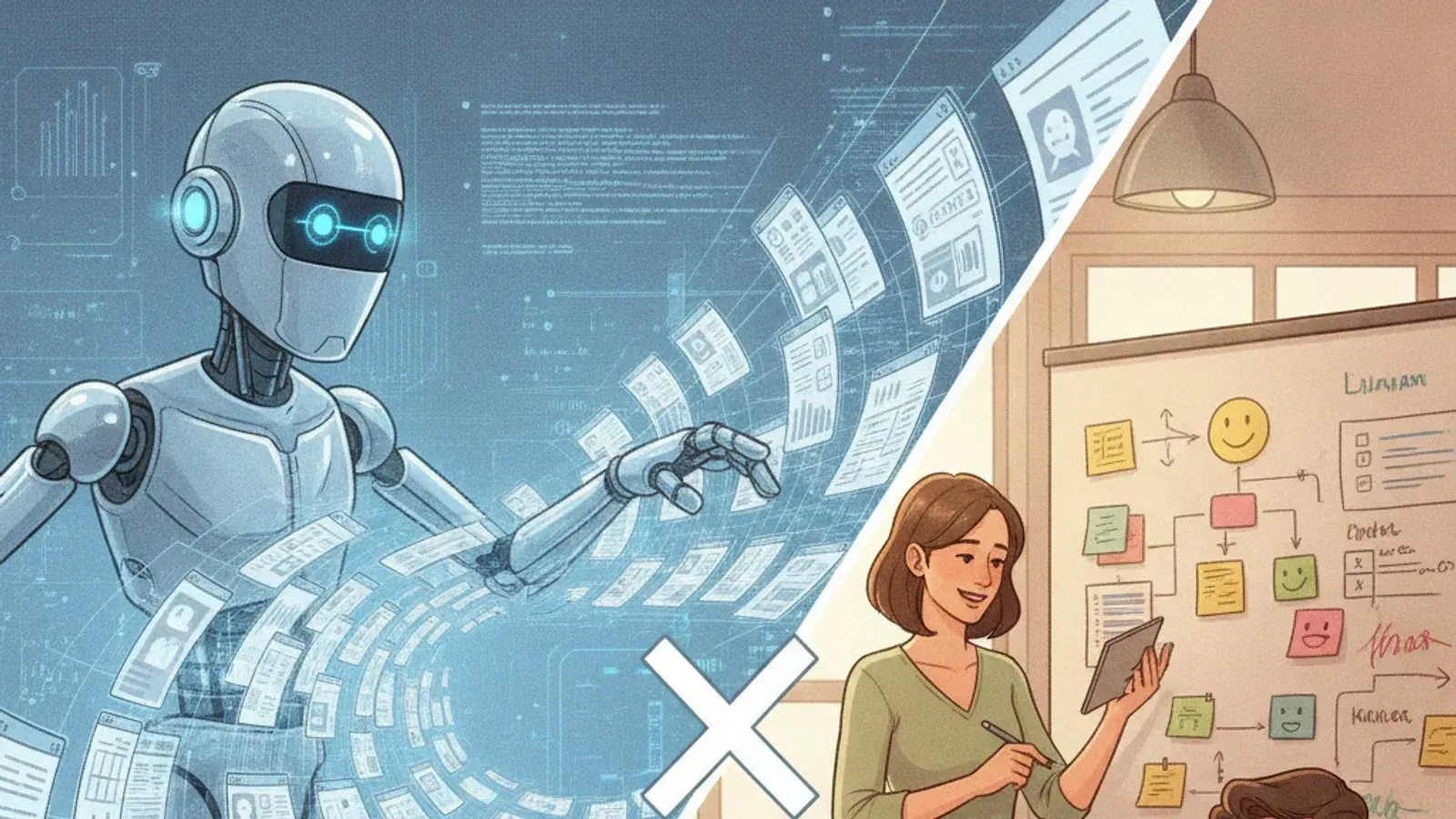
AI excels at generating screens; humans excel at designing the complete experience.
Where Human Judgment Remains Indispensable
While AI accelerates the production of visuals, several critical areas of product design remain firmly in the human domain. These are the areas that transform a collection of screens into a powerful, cohesive, and beloved experience.
Unpacking User Needs and Problem Solving
AI can analyse vast datasets of user behaviour, identifying patterns and correlations. It can tell you what users are doing. However, it cannot truly understand why they are doing it, or the underlying emotional drivers. It cannot conduct a nuanced interview, pick up on subtle non-verbal cues, or empathise with a user's frustration.
Human designers possess intuition, the ability to ask probing questions, and the capacity to synthesise qualitative insights. They move beyond surface-level symptoms to identify the root cause of a problem. This deep understanding is crucial for defining the right problem to solve in the first place, ensuring the product offers genuine value. It is the foundation of any successful AI product design strategy.
Crafting Information Architecture and Flow
Information architecture is the art and science of organising and labelling content so that users can find and understand it. It is about creating logical pathways, anticipating mental models, and guiding users seamlessly through a product. AI can suggest common navigation patterns, but it struggles with the strategic decisions behind content hierarchy, user pathways, and contextual relevance.
A human designer defines the relationships between different pieces of information. They anticipate how a user's knowledge evolves as they move through the product. They decide what information is critical at which stage, and what can be hidden. This thoughtful structuring ensures that the user's journey feels intuitive, not just a series of disconnected screens. Without this human oversight, even the most beautiful AI-generated screens will feel fragmented and confusing.
Interaction, Motion, and Delight
The subtle details of how a product responds to user input often define its overall feel. These are the micro-interactions, the transitions, the haptic feedback, and the small animations that create a sense of responsiveness and delight. They build trust and make a product feel alive and intuitive, rather than static and rigid.
While AI can generate standard animations, it lacks the creative flair and nuanced judgment to design truly delightful and context-aware interactions. A human designer understands the emotional impact of a smooth transition or a playful animation. They know when to add a touch of personality and when to prioritise efficiency. These small, often overlooked, details are what elevate a product from merely functional to truly enjoyable.
Accessibility and Inclusive Design
Designing for accessibility means ensuring your product is usable by everyone, regardless of their abilities. This includes people with visual, auditory, motor, or cognitive impairments. It is not just about meeting compliance standards; it is about empathy and creating an equitable experience. AI can check for colour contrast or font sizes, but it cannot truly understand the diverse spectrum of human needs.
Human designers actively consider a vast array of scenarios and user profiles. They advocate for inclusive practices, test with diverse users, and make conscious decisions that remove barriers. This requires a deep commitment to human-centred principles, foresight, and a nuanced understanding of accessibility guidelines and real-world challenges. It is a moral and practical imperative that demands human judgment and compassion.
The Indefinable Element of Taste and Refinement
Good design often goes beyond mere functionality or aesthetics. It has an indefinable quality, a sense of taste, elegance, and refinement that makes a product feel considered and premium. This is the difference between something that works and something that feels truly special. AI can mimic styles, but it struggles to inject genuine character or a unique point of view.
Human designers bring their cultural understanding, their aesthetic sensibility, and their unique creative vision to the table. They make the subtle choices that reflect a brand's personality and resonate with its target audience on an emotional level. This is what transforms a utilitarian tool into a beloved brand. It ensures the product doesn't just look 'good' but looks right for its specific purpose and audience.
Ultimately, AI provides a vast canvas of possibilities and accelerated execution. But it is the human designer who curates, refines, and imbues that canvas with meaning, purpose, and soul. They make the discerning choices that elevate a product beyond the merely functional.

Human collaboration is key to solving complex design problems and defining user journeys.
The Kraavon Approach: Design and Engineering as One Team
At Kraavon, we embrace the power of AI as an accelerant. We use it to handle repetitive tasks, generate initial concepts, and explore variations quickly. This frees our human designers to focus on the truly strategic, empathetic, and creative work. AI is a powerful tool in our toolbox, but it is not the craftsman. Humans own the thinking, the vision, and the deep understanding of the user and the problem.
Our philosophy is built on the belief that the magic happens when design and engineering work as one cohesive unit. Many teams experience a 'loss of context' between the design handover and the engineering build. This is often where the meticulously crafted user experience begins to unravel, where subtle interactions are lost, and where the product fails to live up to its initial promise.
We understand that a pixel-perfect mockup on a screen is only one part of the equation. The true test comes when that design meets the realities of code, performance, and real-world usage. Our small, senior teams ensure that the intent behind every design decision carries through to the shipped product. We don't just hand off files; we partner with you to build and refine the experience together. This integrated approach ensures that the strategic thread, woven through human empathy and ingenuity, never gets lost.
- Seamless context transfer: Design decisions and their underlying rationale are always understood by engineers.
- Faster iteration: Tight feedback loops between design and code lead to quicker, more effective refinements.
- Higher quality products: The intended experience survives the transition from concept to implementation.
- Reduced waste: Fewer misinterpretations mean less rework and a more efficient development process.
- Stronger product ownership: Your team gains a deeper understanding of the product's foundations, making it easier to own and evolve.
This unified approach is particularly vital when leveraging tools like AI product design. It ensures that the rapid generation of screens is always guided by a clear, human-driven strategy. It allows us to ship premium digital products that are not just visually appealing, but deeply resonant and truly effective for their users. We build with your product's long-term success in mind, ensuring every deliverable is something your team can confidently own and evolve.

At Kraavon, design and engineering work as one team, ensuring the experience survives from concept to code.
Frequently Asked Questions about AI and Product Design
Can AI replace product designers?
No, not entirely. AI is an incredibly powerful tool for augmentation and efficiency. It can automate repetitive tasks, generate initial concepts, and help with analysis. However, it cannot replace the critical human elements of empathy, strategic thinking, nuanced problem-solving, and creative judgment. Designers who learn to harness AI will be more effective, but the core role of understanding users and defining meaningful experiences remains human.
What is the key difference between a screen and an experience?
A screen is a static visual representation, a single snapshot of an interface. An experience is the entire journey a user takes with a product. It encompasses the flow between screens, the emotions felt, the problems solved, and the overall context of use. Screens are components; the experience is the complete, interactive narrative. AI can generate screens, but designing the narrative requires human insight.
When should a product team bring in external design expertise?
Bringing in external design expertise is beneficial at several key stages. This includes early-stage product strategy when defining the core problem and user needs, or when tackling complex design challenges that require fresh perspectives. It is also valuable for scaling design operations, introducing new methodologies, or when your internal team needs specialised skills or additional capacity to ship premium products. Kraavon helps teams bridge the gap from strategy to shipped product, ensuring context is never lost.
How does Kraavon use AI in its design process?
At Kraavon, we strategically integrate AI tools to enhance our workflow, not to replace human creativity. We leverage AI for tasks like rapid prototyping, generating UI variations, content ideation, and design system checks. This allows our senior designers to dedicate more time to deep user research, strategic planning, complex problem-solving, and crafting those nuanced interactions that define truly exceptional products. It is about augmentation and efficiency, always with human oversight.
Designing for the Human Heart
The advent of AI product design tools is exciting and transformative. They are invaluable for accelerating the 'making' aspect of design, allowing us to generate screens with unprecedented speed and consistency. But as we've explored, a screen is merely the visible surface. The true power of a digital product lies in the experience it delivers, the feelings it evokes, and the problems it genuinely solves for its users.
This means that human empathy, strategic thinking, and deep understanding remain at the core of exceptional product design. AI can be a brilliant assistant, but it cannot yet design for the human heart. It cannot feel, intuit, or truly understand the complex tapestry of human needs and desires. That responsibility, and that immense privilege, still belongs to us.
At Kraavon, we believe in building products that resonate deeply. We design experiences, not just screens. We partner with founders and product teams to move from initial strategy to a shipped product, ensuring the human-centred vision is never lost. Our integrated design and engineering approach ensures that every pixel serves a purpose, every interaction delights, and every product truly connects with its audience.
Let's build something truly exceptional together. Connect with us to discuss your product vision.