
UX
The UX Maturity Ladder: How to Advance Your Product Experience
Understanding your organisation's UX maturity is crucial for building valuable digital products. This guide helps product and design leaders assess their current stage and provides practical steps to elevate their product experience.

Every organisation wants to build exceptional products, but not all succeed in delivering truly outstanding user experiences. The difference often lies in an often-overlooked factor: UX maturity. This concept describes how deeply user experience principles are embedded within a company's culture, processes, and strategy. It's not just about having designers; it's about how design thinking influences every decision, from initial strategy to final code.
What is UX maturity and why does it matter?
UX maturity is more than just a buzzword. It's a measure of an organisation's capability to consistently deliver high-quality, user-centred products. A low UX maturity means design is an afterthought, often leading to wasted effort and poor product adoption. High UX maturity, however, positions design as a strategic asset, driving innovation and measurable business value.
When design is treated as merely a decorative layer, products become difficult to use, expensive to maintain, and fail to meet user needs. This leads to frustrated customers, increased support costs, and missed market opportunities. Conversely, a mature UX approach ensures that every product decision is informed by user understanding. It moves design from a superficial polish to a fundamental driver of success.
Advancing your organisation's UX maturity is not just about making things look good. It's about building a sustainable process for creating products that users love and that achieve your business objectives. It impacts everything from team collaboration and efficiency to market competitiveness and bottom-line growth. It is a critical investment in your future.
The UX Maturity Ladder: Five stages of product experience
To help you understand where your team stands, we've outlined a five-stage UX maturity ladder. Each stage describes common characteristics and symptoms. More importantly, we provide actionable steps to progress to the next level. This model gives you a clear roadmap for improvement.
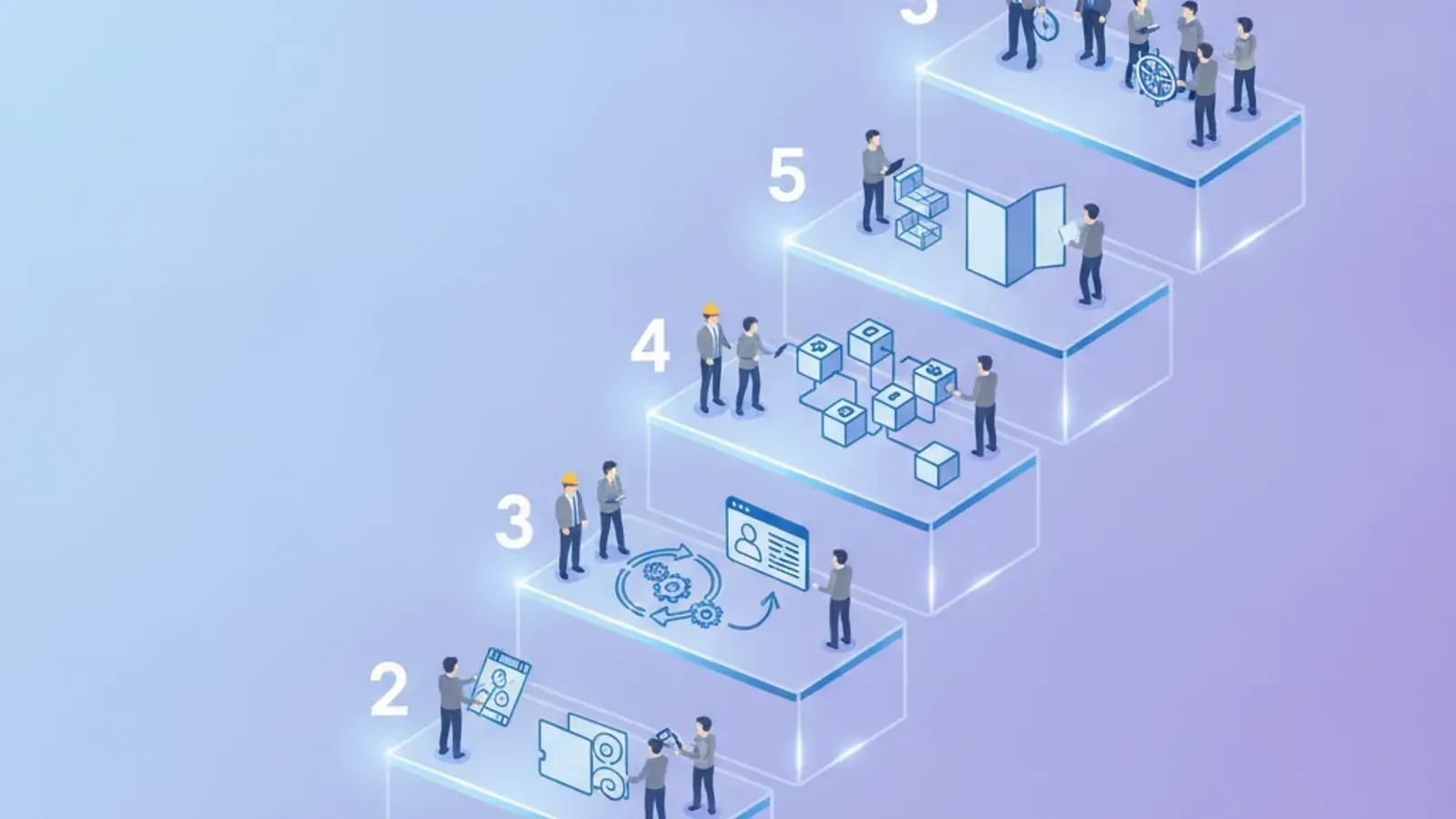
Understanding your position on the UX maturity ladder is the first step towards improvement.
Stage 1: UX as an afterthought
At this foundational stage, user experience is largely ignored or considered an optional extra. Design decisions are made based on developer convenience or internal assumptions, not actual user needs. There is often no dedicated UX role, or if there is, their input is minimal and late in the development cycle. The focus is purely on functionality and shipping code, regardless of usability.
- Product decisions are driven by engineering feasibility or business demands, not user needs.
- There is no dedicated UX professional or team.
- User research is non-existent, or consists only of anecdotal feedback.
- Products often feel clunky, inconsistent, and difficult to use.
- Teams frequently rebuild features due to poor initial user adoption.
- Design is seen as 'making things pretty' after development is complete.
How to advance from Stage 1
The goal here is to introduce the very concept of user-centred design. Start small, focus on quick wins, and build a case for the value of UX. Even basic efforts can yield significant improvements and start shifting mindsets.
- Advocate for basic user research: Conduct informal user interviews, observe users, or run simple surveys. Even talking to five users can uncover critical issues.
- Prototype simple flows: Use tools like Figma or even paper sketches to visualise user journeys. Share these early and gather feedback internally.
- Share findings: Document and present insights from your research. Show how user pain points directly impact business goals, like conversion rates or support calls.
- Identify a UX champion: Find someone passionate about users who can start advocating for user needs within the team.
- Focus on one specific problem: Pick a single, high-impact usability issue and demonstrate how a user-centred approach can solve it effectively.
To move past 'UX as an afterthought', focus on small, impactful changes. Show, don't just tell, the value of understanding your users. This initial success will be crucial for gaining buy-in for further investment.
Stage 2: Design as decoration
At this stage, organisations recognise the need for design, often hiring a designer or two. However, design is primarily viewed as a superficial layer. Its role is to make the product look good, not necessarily to make it usable or strategic. Designers might be brought in late, handed fully formed features, and asked to 'skin' them. The emphasis is on aesthetics, not underlying user experience principles.
- Designers are often brought in at the end of the development cycle.
- Visual design is prioritised over usability or information architecture.
- Design outputs are inconsistent across different product areas.
- User testing is sporadic or absent; decisions are based on designer preference or stakeholder opinions.
- Designers are seen as pixel-pushers, not strategic problem-solvers.
- There's a lack of formal design process or standards.
How to advance from Stage 2
The objective here is to shift the perception of design from mere aesthetics to a structured, problem-solving discipline. Establish basic processes and start collecting data to back up design decisions. Integrate designers earlier into the feature definition process. This moves them beyond just 'making things look nice'.
- Standardise visual design: Begin creating a simple style guide or component library. This ensures consistency and makes the product feel more professional.
- Introduce basic user testing: Conduct usability tests with prototypes or existing features. Even unmoderated tests can provide valuable quantitative data.
- Establish design feedback loops: Create regular opportunities for designers to present work and receive constructive criticism from product and engineering teams.
- Involve designers earlier: Push for designers to be part of initial requirement gathering sessions, not just handed a brief.
- Educate stakeholders: Present the impact of design choices on user behaviour and business metrics. Connect improved usability to tangible results like reduced bounce rates or increased task completion.
To move from 'design as decoration', you must demonstrate that design is a process, not just a deliverable. Show how structured design activities solve real user problems and prevent costly rework.

Breaking down silos between design and engineering is crucial for advancing UX maturity.
Stage 3: Design as a process
Organisations at this stage have established design roles and processes. Designers follow a methodical approach, including research, ideation, prototyping, and testing. There's a clearer understanding of user needs, and design is seen as essential for crafting usable products. However, design often remains somewhat siloed, working alongside engineering rather than fully integrated. Handoffs can still be a point of friction, and design impact might not always be directly linked to business outcomes.
- There is a dedicated UX team or individual following a structured design process.
- User research is conducted regularly, though perhaps not always strategically tied to business goals.
- Prototypes are used to validate ideas before development.
- Design systems are emerging or in early stages, improving consistency and efficiency.
- Designers are involved earlier in the product lifecycle, but might still struggle with 'seat at the table' issues.
- Measuring UX success is nascent; metrics might focus on design outputs rather than user outcomes.
How to advance from Stage 3
The key to moving beyond 'design as a process' is to break down silos and integrate design more deeply with other functions, especially engineering and product. Start connecting UX efforts directly to key performance indicators (KPIs) and business objectives. This proves design's strategic value and makes it indispensable.
- Formalise research practices: Establish a cadence for user research, aligning it with product roadmaps. Share insights widely and create a central repository for user knowledge.
- Mature your design system: Move beyond a simple style guide. Build a robust, documented, and version-controlled design system. Ensure it is co-owned by design and engineering.
- Foster design and engineering collaboration: Implement practices like co-design sessions, shared critique, and regular syncs. Embed designers within engineering teams where possible.
- Define UX metrics and KPIs: Start tracking measurable user outcomes, not just design deliverables. Link improved usability metrics (e.g., task success rate, time on task) to business KPIs (e.g., conversion, retention).
- Encourage leadership buy-in: Present case studies demonstrating how specific design interventions led to measurable business improvements. Advocate for UX at leadership meetings.
To reach the next stage, design must become a truly integrated part of the product development lifecycle. This means shared ownership of outcomes, not just efficient handoffs.
Stage 4: Design integrated with engineering
At this advanced stage, design and engineering are seamlessly integrated. Designers often work embedded within cross-functional product teams, collaborating closely with engineers from conception to launch. The design system is a shared, living resource, evolving with both design and technical needs. There is a mutual respect and understanding of each other's disciplines, leading to efficient workflows and high-quality product delivery. UX metrics are regularly tracked and influence product decisions.
- Designers are embedded in cross-functional product teams, working daily with engineers and product managers.
- The design system is robust, actively maintained, and used by both design and engineering teams.
- Continuous user research informs product strategy and feature prioritisation.
- UX metrics are regularly collected, analysed, and used to make data-driven design decisions.
- Handoffs are minimal; teams share responsibility for the user experience.
- There is a culture of shared problem-solving and iterative improvement.
How to advance from Stage 4
To elevate beyond 'design integrated with engineering', the focus shifts from execution to strategy and innovation. Design becomes a proactive force, not just responsive to product roadmaps. It starts to anticipate future needs, explore new opportunities, and directly influence the overall business direction. This stage involves empowering design leadership to shape the very definition of the product.
- Empower design leadership: Give design leaders a voice at the executive level, enabling them to influence strategic business decisions and define product vision.
- Proactive user insights: Conduct generative research to uncover unmet user needs and future opportunities, not just validating existing ideas. Explore emerging trends.
- Invest in design ops: Optimise design workflows, tools, and processes to scale design impact and efficiency across the organisation. This ensures design can operate at a strategic level.
- Champion design thinking company-wide: Train non-designers in design thinking methodologies to foster a user-centric culture across all departments.
- Explore strategic partnerships: Collaborate with external experts or academic institutions to push the boundaries of design and innovation within your product domain.
To reach the pinnacle of UX maturity, design must transition from flawlessly executing features to proactively shaping the product's strategic direction and identifying future opportunities. This requires strong design leadership and a culture of continuous innovation.

At the highest level of UX maturity, design drives strategic business decisions.
Stage 5: Design driving strategy
This is the highest level of UX maturity. Here, design is not just integrated; it is a core strategic driver of the business. Design leaders are part of the executive team, influencing product roadmaps, business models, and overall company vision. User-centred thinking permeates every aspect of the organisation. Products are consistently innovative, highly usable, and achieve market leadership by truly understanding and anticipating user needs. Design is seen as a key differentiator and a source of competitive advantage.
- Design leaders hold executive positions, influencing company strategy and product portfolio.
- User research is proactive and generative, identifying new market opportunities and future user needs.
- Design thinking is a company-wide competence, not just confined to the design team.
- Products consistently set industry benchmarks for usability, innovation, and user satisfaction.
- UX metrics are directly tied to business outcomes and routinely reviewed by leadership.
- The organisation has a strong design culture, attracting top talent and fostering continuous innovation.
Sustaining Stage 5
Reaching Stage 5 is an incredible achievement, but the work doesn't stop there. Sustaining this level of UX maturity requires continuous vigilance, investment, and adaptation. The market, technology, and user expectations are constantly evolving, so your organisation's approach to design must evolve with them. Complacency is the biggest threat to maintaining this strategic advantage.
- Continuous innovation: Maintain a dedicated budget and focus on generative research and experimental design to stay ahead of the curve.
- Talent development: Invest in upskilling your design team and fostering a culture of learning and mentorship to retain top talent.
- Evangelise design thinking: Regularly reinforce the importance of user-centred approaches through internal communications, workshops, and leadership examples.
- Monitor market and tech trends: Stay abreast of new technologies, design methodologies, and shifts in user behaviour to proactively adapt your strategy.
- Measure and iterate: Even at Stage 5, continuous measurement of UX and business outcomes is critical for identifying areas for further improvement and validating strategic decisions.
At Stage 5, design is deeply embedded in the DNA of the organisation. It's not just a department; it's a philosophy that drives business strategy, innovation, and ultimately, market leadership. This level allows companies to define, rather than just react to, their industry.
Where does your team stand? A quick self-assessment
Use these questions to quickly gauge your organisation's current UX maturity. Be honest with your answers; this is for internal assessment and improvement.
- Does your team consistently conduct user research before defining new features?
- Do designers participate in strategic planning meetings, influencing product roadmaps?
- Is there a shared, actively used design system that both designers and engineers contribute to?
- Are UX metrics (e.g., task success, satisfaction scores) regularly tracked and linked to business KPIs?
- Do product, design, and engineering teams collaborate closely throughout the entire development cycle, or are there significant handoffs?
- Is there a dedicated budget and clear career path for UX professionals within your organisation?
- Does senior leadership frequently reference user needs and experience in their discussions about business strategy?
- When a new product idea emerges, is user validation a mandatory early step, or is it often skipped?
If you answered 'no' or 'sometimes' to most of these, you likely sit in the earlier stages of the UX maturity ladder. A predominance of 'yes' answers suggests a more mature approach. This assessment is a starting point, not a definitive grade. It highlights areas where you can focus your improvement efforts.
Accelerating your UX maturity with a trusted partner
Advancing through the UX maturity ladder can be a long and challenging journey, especially for organisations with deeply entrenched processes. It requires significant internal investment in time, resources, and cultural change. This is where a strategic partner can make a substantial difference, helping you to bypass common blockers and accelerate your progress.
At Kraavon, we don’t believe in simply handing off files. We partner with founders and product teams to integrate deeply with your existing structure, acting as an extension of your team. Our unique 'design and engineering as one' model ensures that strategy, design, and engineering work in perfect synchronicity from day one. This unified approach eliminates friction, maintains context, and builds better products, faster.
By bringing senior, experienced design and engineering talent together, we can help you jump levels on the UX maturity ladder. We establish robust research habits, build scalable design systems, and embed practices of deep collaboration. Our aim is to not only ship premium digital products with you but also to leave your team with the knowledge, tools, and processes to sustain and further advance your newfound UX maturity. We empower your team to own the future of your product experience, long after our engagement.
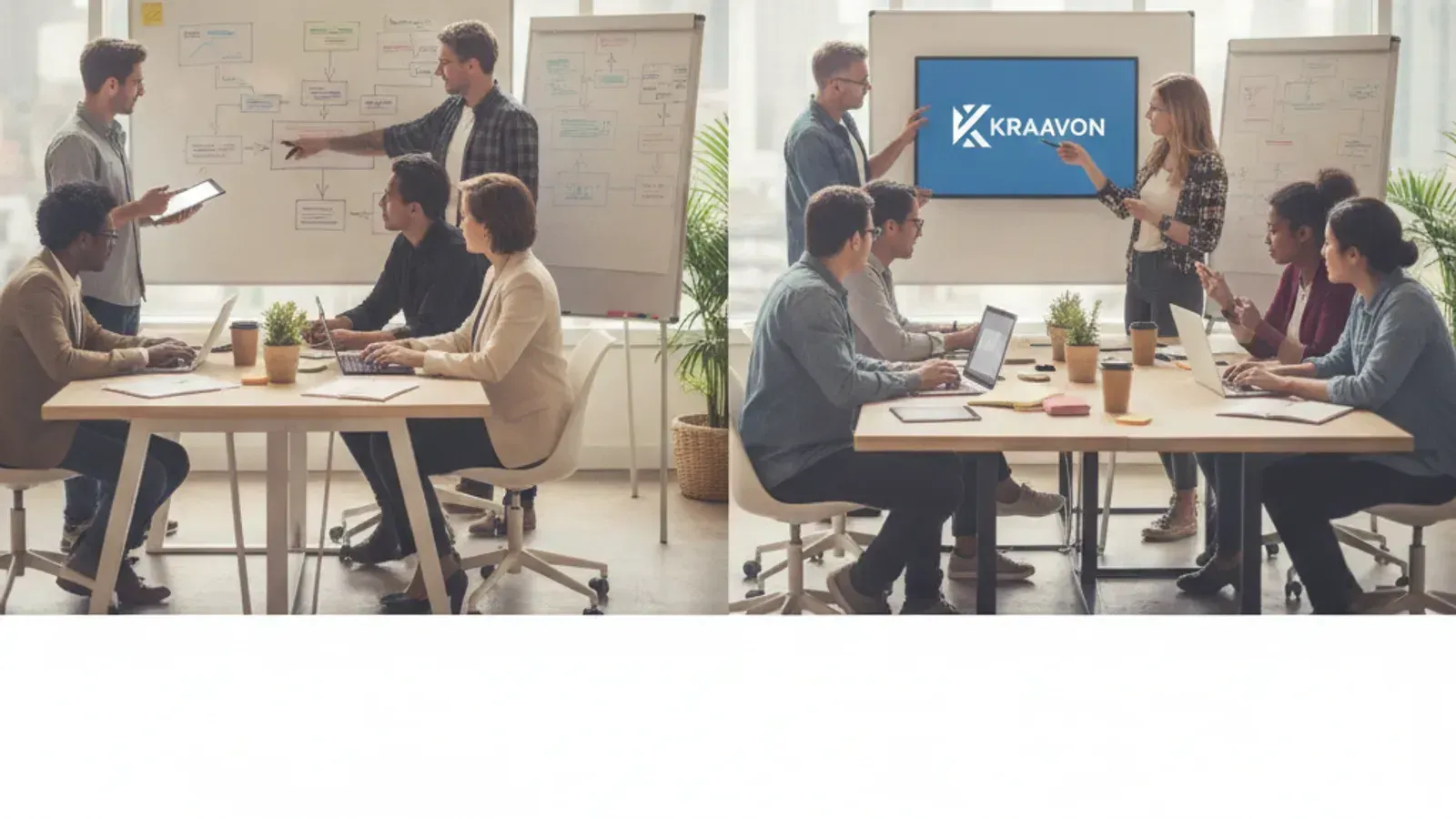
Kraavon's 'design and engineering as one' model fosters seamless collaboration and accelerates UX maturity.
Don't let your product experience be an afterthought. Partner with Kraavon to build premium digital products and elevate your organisation's UX maturity. Explore our [product design services](/services/product-design) today.
Frequently asked questions about UX maturity
How can we measure our UX maturity?
Measuring UX maturity involves assessing several organisational aspects. Look at your processes for user research, design system adoption, collaboration between design and engineering, and how UX metrics link to business outcomes. Conduct surveys of your teams to gauge their understanding and involvement in user-centred design. Many organisations use formal UX maturity models, like the one presented here, as a framework for self-assessment and benchmarking.
What are the most common blockers to improving UX maturity?
Common blockers include a lack of leadership buy-in, insufficient budget for design and research, siloed teams that hinder collaboration, and a resistance to change within the company culture. Other challenges are a focus on short-term gains over long-term user value, and a lack of understanding regarding the ROI of good UX. Technical debt and rigid legacy systems can also impede progress by limiting design flexibility.
How long does it typically take to advance a stage?
The time it takes to advance a stage on the UX maturity ladder varies greatly. It depends on your starting point, the resources you commit, and the organisational culture. Moving from Stage 1 to 2 might take 6-12 months with focused effort. Progressing to Stage 3 or 4 can take 1-3 years. Reaching Stage 5 is an ongoing journey that requires continuous commitment and cultural reinforcement. Significant shifts often require consistent effort over several years.
Is it possible to skip stages on the UX maturity ladder?
While you can accelerate progress with a dedicated effort or external partnership, it's generally not possible to truly 'skip' a stage. Each stage builds foundational capabilities essential for the next. For example, you cannot effectively integrate design with engineering (Stage 4) if you haven't established design as a consistent process (Stage 3). A partner like Kraavon can help you move through stages much faster by bringing in established expertise and frameworks, but the progression of capabilities is typically sequential.