
General
What 'Design and Engineering as One Team' Actually Gets You
Discover the tangible benefits of a unified design and engineering approach. This integrated method ensures your product ships as intended, avoiding common pitfalls and delivering a superior user experience.
Imagine the scene. A founder, let's call her Sarah, stands beaming at a product launch event. Months of hard work, late nights, and countless decisions have led to this moment. The lights dim, the keynote begins, and a sleek, beautifully designed app is unveiled. Sarah glows, picturing the seamless user experience she approved in the mockups. But then, a few days post-launch, the support tickets start rolling in. Users are frustrated. That smooth onboarding flow? It's buggy. The intuitive search? It crashes on certain queries. The elegant animation? It lags. Sarah feels a chill, realizing the vision she saw on paper somehow didn't translate into the product her users actually received. This is the silent tragedy of many product launches, often stemming from a fundamental disconnect: a lack of design and engineering as one team.
This scenario is far too common. It highlights a painful truth about how product development often goes sideways. Great designs get watered down. Innovative ideas get lost. User experiences falter. This happens not because of malice, but because of a broken process. When design lives in one world and engineering in another, the journey from concept to code becomes a minefield of misunderstandings. It creates a gap where critical details fall, leaving founders like Sarah wondering what went wrong. Understanding this core problem is the first step toward building something truly exceptional.
The Cost of the Handoff: Why Traditional Product Development Fails
In many product development setups, design and engineering operate as separate entities. Designers painstakingly craft beautiful screens, user flows, and interactive prototypes. They pour over every pixel, every transition, every micro-interaction. Once their work is deemed 'complete,' these designs are then 'handed off' to the engineering team. It's often a formal presentation, a stack of files, or a link to a design tool. The designers then typically move on to the next project or phase, their direct involvement in the build diminishing rapidly. This separation creates an invisible wall, a chasm of potential misunderstanding.
Engineers, on the other side of this wall, then take these static or semi-interactive designs and try to translate them into living code. They face the challenge of interpreting intent from visuals. Questions inevitably arise. What happens if a user types too much in this field? How should this complex animation behave on a slower device? What is the backend impact of this seemingly simple design choice? Without immediate, direct access to the design's original context and the designer's thought process, engineers often have to make assumptions. These assumptions, even when well-intentioned, can slowly but surely chip away at the product's integrity. Each small guess, each minor interpretation, subtly alters the final outcome.
Details get lost in translation. A designer might envision a subtle visual cue that implies a specific system behavior. An engineer might see a static element and build it as such, missing the implied interaction. Edge cases, those often-overlooked scenarios like network errors or unusual user inputs, are frequently not fully accounted for in design files. When these unaddressed edge cases appear in code, engineers are left to solve them on the fly. Their solutions might be functional, but they may not align with the overall user experience strategy. The result is a finished product that quietly drifts away from the original intent, often leading to a frustrating user experience like Sarah's.
This handoff approach also slows down iteration. When a design needs a tweak or an engineering challenge requires a design rethink, the communication loop is long. A ticket is filed, a meeting is scheduled, context is re-established. Precious time is lost. This often leads to developers building exactly what was asked for, even if it's not the optimal solution, simply because the path of least resistance is to follow the spec rather than engage in a lengthy back-and-forth. The cumulative effect of these small disconnects is a product that feels less cohesive, less intentional, and ultimately, less delightful for its users. It’s a costly way to build, both in terms of time and in terms of the final product's quality.
The Kraavon Way: True Partnership with Design and Engineering as One Team
At Kraavon, we believe there’s a better way. We eliminate the handoff problem by fostering design and engineering as one team from day one. This isn't just a slogan; it's a fundamental operating principle that redefines how products are built. From the initial strategy sessions to the final lines of shipped code, the same integrated team owns the product. This means designers and engineers aren't just co-located; they are co-conspirators in crafting the best possible product. They sit in the same conversations, tackle problems together, and share a unified vision.
What does this look like in practice? Imagine a design decision being made. Instead of a designer proposing an idea in a vacuum, an engineer is right there in the room. This means a design decision is made with a clear, immediate understanding of what it costs to build. Is that complex animation truly worth the performance hit? Can this intricate data display be simplified without losing its impact? These questions are answered proactively. Conversely, when an engineering decision needs to be made, the designer is present. An engineering choice about how to structure a component is made with a clear understanding of how it should feel to the user, how it fits into the overall aesthetic, and what impact it has on the user experience. This continuous dialogue prevents problems before they even arise.
There is no 'over the wall' moment because there is no wall. This shared context means details don't get lost. Edge cases are discussed and designed for collaboratively. If a technical constraint emerges, designers and engineers can brainstorm creative solutions together, often leading to more innovative and robust outcomes than either team could achieve alone. This collaborative environment fosters a deep mutual respect and understanding of each other's craft. Designers appreciate the complexities of engineering, and engineers gain a profound appreciation for the nuances of user experience.
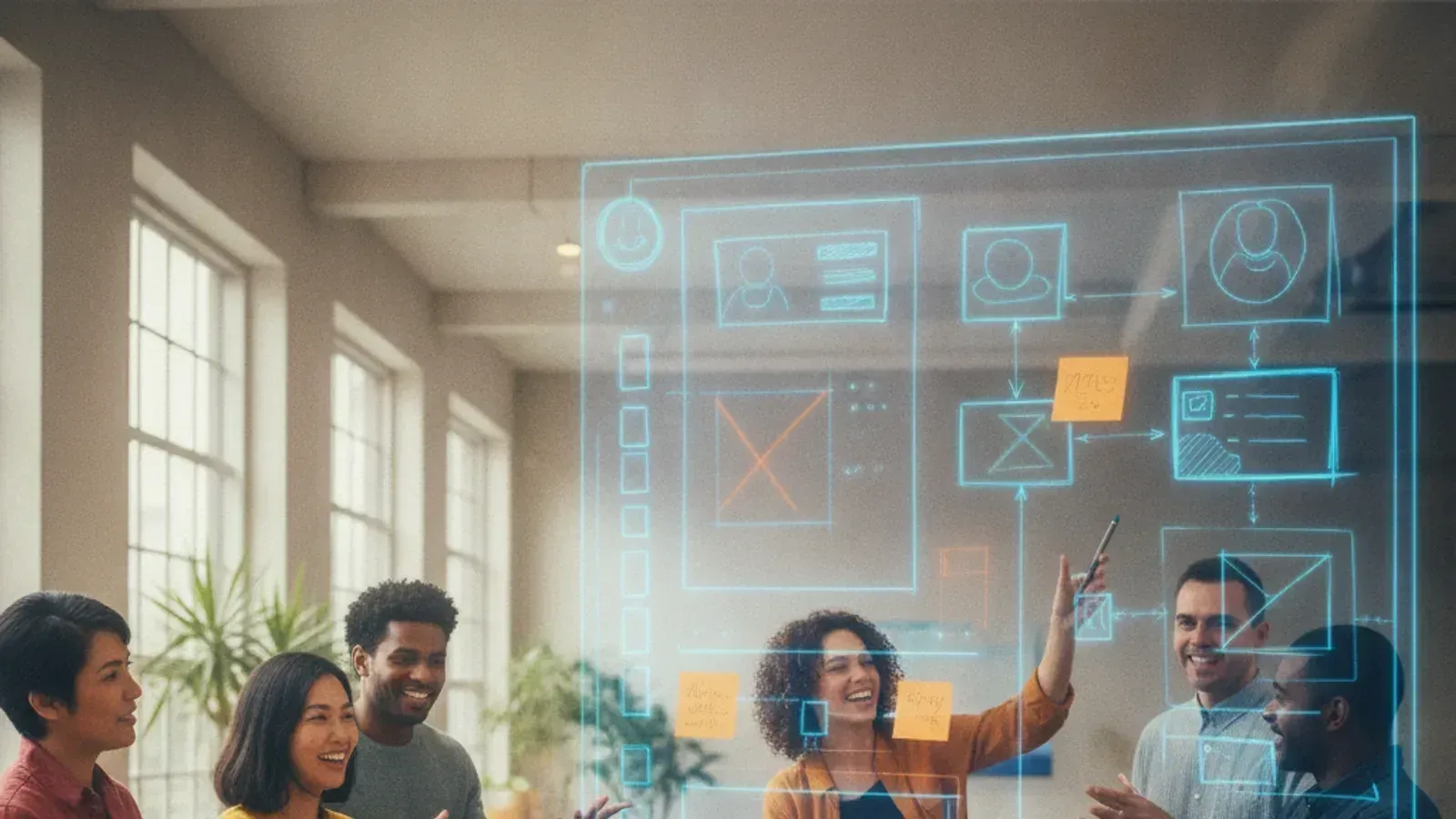
When design and engineering work as one, clarity and shared vision become the norm.
This unified approach delivers several profound benefits for founders and product teams like yours. First, you get fewer surprises. The product you see evolving in daily stand-ups and sprint reviews is the product that will launch. There are no sudden revelations post-launch about overlooked technical debt or design inconsistencies. Second, you achieve faster iteration cycles. Because communication is fluid and continuous, feedback loops are incredibly tight. Changes can be discussed, designed, and implemented rapidly, allowing the product to evolve quickly based on new insights without costly delays. This agility is crucial in today's fast-paced market.
Most importantly, this integrated approach ensures that the experience you approved in design is truly the experience your users actually get. The fidelity between concept and reality remains high. The subtle interactions, the carefully crafted flows, and the overall emotional resonance of the product are preserved through the development process. Your vision isn't just built; it's realized with precision and care. This commitment to an integrated process means you're investing in a partner who genuinely cares about shipping a product that lives up to its promise, every single time.
Thinking Like a Product Company, Because We Are One
Many agencies claim a 'product mindset.' For us, it’s not just talk; it's woven into our DNA. We don't just build products for clients; we build and run our own products alongside client work. This unique position means we live and breathe the challenges and triumphs of product ownership every day. We aren't theorizing about what works. We're actively putting our own advice to the test, feeling the direct impact of every decision. This hands-on experience translates directly into the value we bring to your project, making our advice grounded in real-world ownership.
Our internal products, such as Botgent for branded AI chatbots, Blog Builder for AI-assisted content, Kraavon UI as a robust component system, and Kraavon Labs for cutting-edge experiments, are more than just side projects. They are our proving grounds. We have felt the tangible cost of a rushed data model when it needs a costly refactor months down the line. We have experienced the immense payoff of a well-designed design system that accelerates development and ensures consistency across multiple products. We understand firsthand the critical difference a fast, reliable, and intuitive interface makes to real users, because we are those users for our own creations.
- We prioritize scalable architecture: Learning from our own growth pains, we build systems that can expand with your success, avoiding costly rebuilds.
- We champion user-centric design: Our internal products are constantly iterated based on user feedback, reinforcing the importance of genuine user empathy.
- We embrace design systems: We've seen how a consistent, reusable component library dramatically speeds up development and improves product quality.
- We understand long-term maintenance: We've lived with our past decisions, making us acutely aware of the importance of clean code and thorough documentation.
- We value performance: Our own users demand speed, teaching us to bake in performance considerations from the very beginning, not as an afterthought.
This internal product development means we bring a perspective that extends beyond the current screen or immediate deliverable. We think about the product's entire lifecycle: how it will scale, how it will be maintained, and how it will evolve. Our advice is not theoretical; it's forged in the fires of real product ownership. This means you gain a partner who thinks beyond the current screen to what your product needs to become, ensuring every decision contributes to its long-term success. We help you build for tomorrow, not just for today.
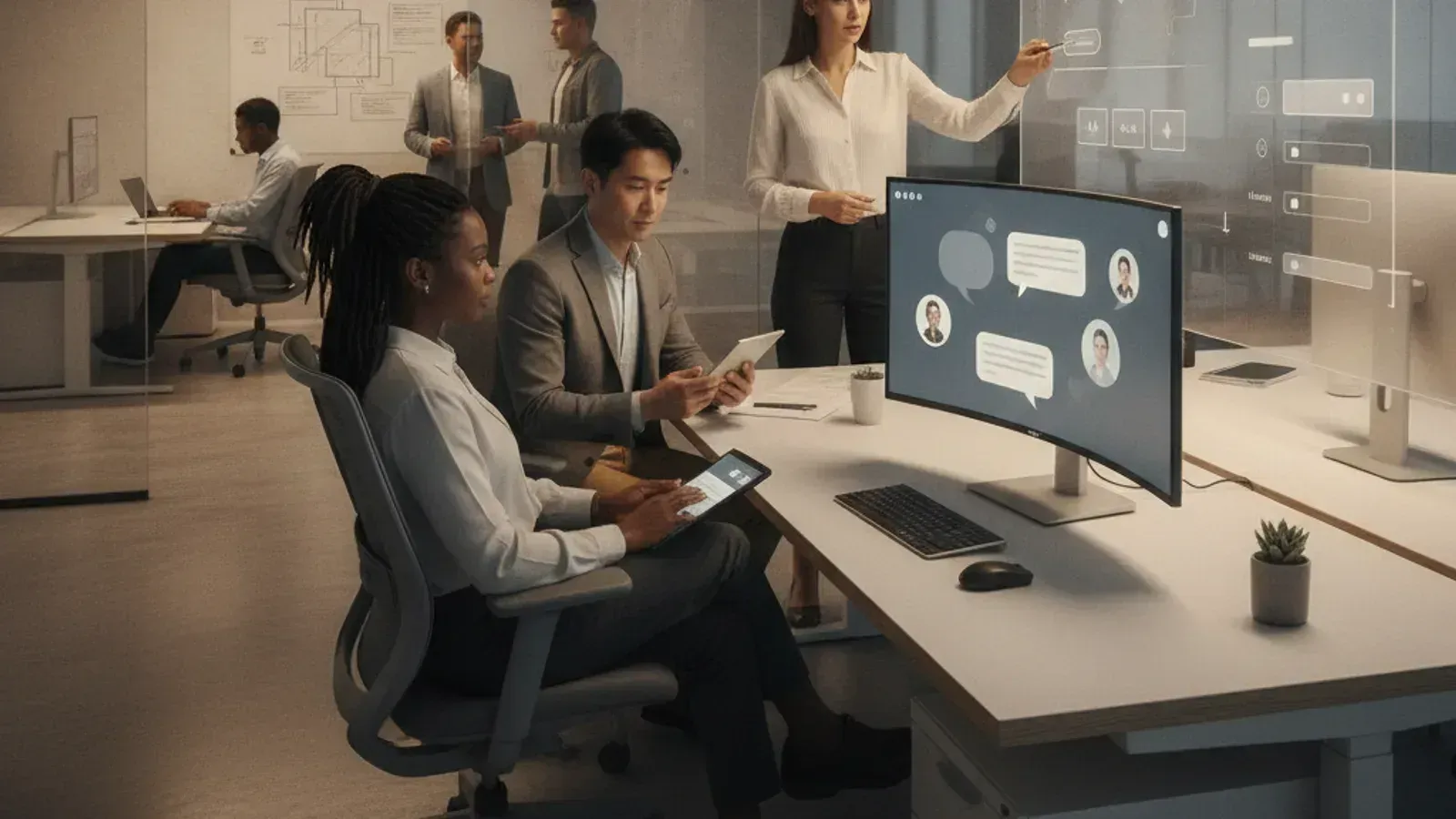
Our experience building our own products directly informs the strategic advice we give to clients.
The Direct Benefits of a Small, Senior Team
A common frustration with larger agencies is the 'sales-team switch.' Experienced, senior people are brought in to win your business, painting a picture of high-level expertise. Then, once the contract is signed, junior staff are assigned to deliver the work. These junior team members often learn on your budget, leading to slower progress, more mistakes, and a diluted quality of craft. This is not how we operate. Kraavon is a small, senior team, by deliberate design. The people who scope your project, who understand your vision, are the very same people who roll up their sleeves and do the actual work.
This commitment to a small, senior team brings immediate and tangible advantages. You get a direct line to the people building your product. There are no layers of account managers, project coordinators, or intermediary stakeholders diluting communication. Your feedback goes straight to the designers and engineers implementing it. This direct communication keeps quality exceptionally high. Decisions get made quickly, without traveling through lengthy approval chains. When you need an answer or want to explore an idea, you're talking directly to the experts who can provide insight and direction immediately. This speed and clarity prevent costly delays and misunderstandings.
Furthermore, the craft that goes into your product comes from genuine experience, not from a training exercise. Our senior designers have honed their skills over many years, tackling diverse challenges across various industries. Our senior engineers have built and shipped complex systems, understanding the nuances of robust architecture and maintainable code. They bring a depth of knowledge that anticipates problems, identifies optimal solutions, and executes with precision. This means you benefit from seasoned judgment and expertise, ensuring your product is built right the first time, with a level of polish that stands out.
Moving Fast, Without Accumulating Debt
Everyone wants speed in product development, but speed is easy to promise and dangerously easy to fake. You can ship quickly by cutting corners: skipping crucial tests, ignoring accessibility standards, or leaving behind a codebase that the next team will dread to open. This isn't true speed; it's simply accumulating technical debt with a ticking deadline attached. Such a product might launch fast, but it will quickly become a liability, demanding expensive rebuilds or constant patching, hindering future growth and innovation. This is a trap many founders fall into, trading immediate gratification for long-term pain.
We move quickly because the way we work systematically removes waste, not because we skip the parts that truly matter. Our integrated approach, where design and engineering as one team are constantly collaborating, is inherently efficient. We start with clear problem framing upfront. This means we invest time early on to deeply understand the core problem we're solving and define the scope precisely. This clarity minimizes rework later, as everyone is aligned on the objective and the path to get there. This structured start prevents costly detours and ensures every effort is directed towards a meaningful outcome.
A shared design system is another powerful accelerator. Instead of reinventing the same button, form field, or navigation pattern for the tenth time, we leverage a consistent library of components. This not only ensures visual and interactive consistency across the product but also drastically reduces development time. Engineers can pull pre-built, tested components, focusing their energy on unique challenges rather than repetitive tasks. This efficiency is critical for maintaining momentum and delivering features rapidly without sacrificing quality. This focus on reusable elements is a cornerstone of our streamlined process.
Our engineering practices are built on a foundation of production-grade quality. This means sensible architecture, performance budgets, and accessibility are not afterthoughts; they are baked in from the very beginning of the development process. We write clean, well-documented code that is designed for longevity and scalability. We implement robust testing to catch bugs early. We consider performance from the ground up, ensuring your product loads quickly and responds smoothly, even under heavy load. We build with accessibility in mind, ensuring your product is usable by the widest possible audience. This comprehensive approach means the thing we ship is the thing that lasts, providing a solid foundation for your product's future.
What this ultimately means for you is a product that reaches users sooner, generating revenue and gathering valuable feedback without compromising on quality or stability. You get a robust, high-performing product that holds up under real-world load, day after day. You won't face a costly rebuild waiting just six months down the line because shortcuts were taken. We deliver speed that is sustainable, setting your product up for long-term success rather than short-term gains at a future cost. This is the hallmark of building with true craftsmanship and foresight, something we deeply value.
Building for What Comes After Launch
For us, launch is not the finish line. It's truly the start of the part that actually matters. A product that looks beautiful on day one but cannot be easily extended, maintained, or scaled quickly becomes a liability. The moment it starts to gain traction and demand new features or handle increased user load, a poorly constructed product will buckle. It becomes a bottleneck to growth, forcing difficult and expensive decisions about refactoring or even rebuilding. We recognize that your product's journey extends far beyond the initial release, and we build with that future in mind.

A successful launch is just the beginning; we build with your product's future growth in mind.
Everything we build is made to be handed over and grown. We prioritize clean architecture, ensuring the underlying structure of your product is logical, modular, and easy to understand. This means that as your team grows or as new features are required, developers can quickly grasp how everything fits together and extend the system without introducing chaos. We also create documented systems. This isn't just about code comments; it's about clear, comprehensive documentation that explains design patterns, technical decisions, and operational procedures. This ensures that anyone coming into the project, whether from your internal team or a future partner, can quickly get up to speed.
Crucially, we design and build interfaces and components that your own team can extend. You are never locked into a proprietary system or left stranded without the knowledge to move forward. Our goal is to empower you, not to create a dependency. When your product gains traction, the foundation we've laid is ready for it. It's built to scale, designed for new features, and structured for ongoing maintenance. This foresight ensures that the investment you make with us continues to pay dividends long after our engagement concludes. It empowers you to truly own your product's destiny, allowing for continuous innovation and adaptation.
This approach means you're not just getting a product; you're getting a sustainable asset. It's something you own completely, something you can keep building on, rather than a black box that only we can touch. This is a significant distinction from many other development partners, ensuring your long-term independence and flexibility.
The long-term value of this approach is immense. It protects your initial investment by ensuring the product remains adaptable and robust. It accelerates your future development cycles because your team isn't battling a legacy of technical debt. It also fosters a sense of true ownership and capability within your organization. We believe in building products that endure, that grow, and that truly serve your business objectives for years to come. This is the promise of design and engineering as one team, extended to your product's entire lifespan. We invite you to learn more about our philosophy and how we might partner together by exploring [our blog](/blog).
Sarah, the founder from our opening, eventually found a partner who embodied this integrated approach. With their next product, she witnessed a different journey. Designers and engineers collaborated daily, solving challenges together. The product shipped on time, bug-free, and most importantly, it matched her vision perfectly. Users loved it. The support tickets were minimal, filled with praise rather than complaints. This transformed her business, all because she chose a partner where design and engineering weren't just co-existing, but truly thriving as one cohesive team. This is the difference that genuine partnership makes.
If you're a founder shaping a new product, or a team scaling an existing one, and you care about craft as much as speed, we should talk. We're not the cheapest option, but we deliver premium work from a senior team that ships. Let's build something exceptional together.